







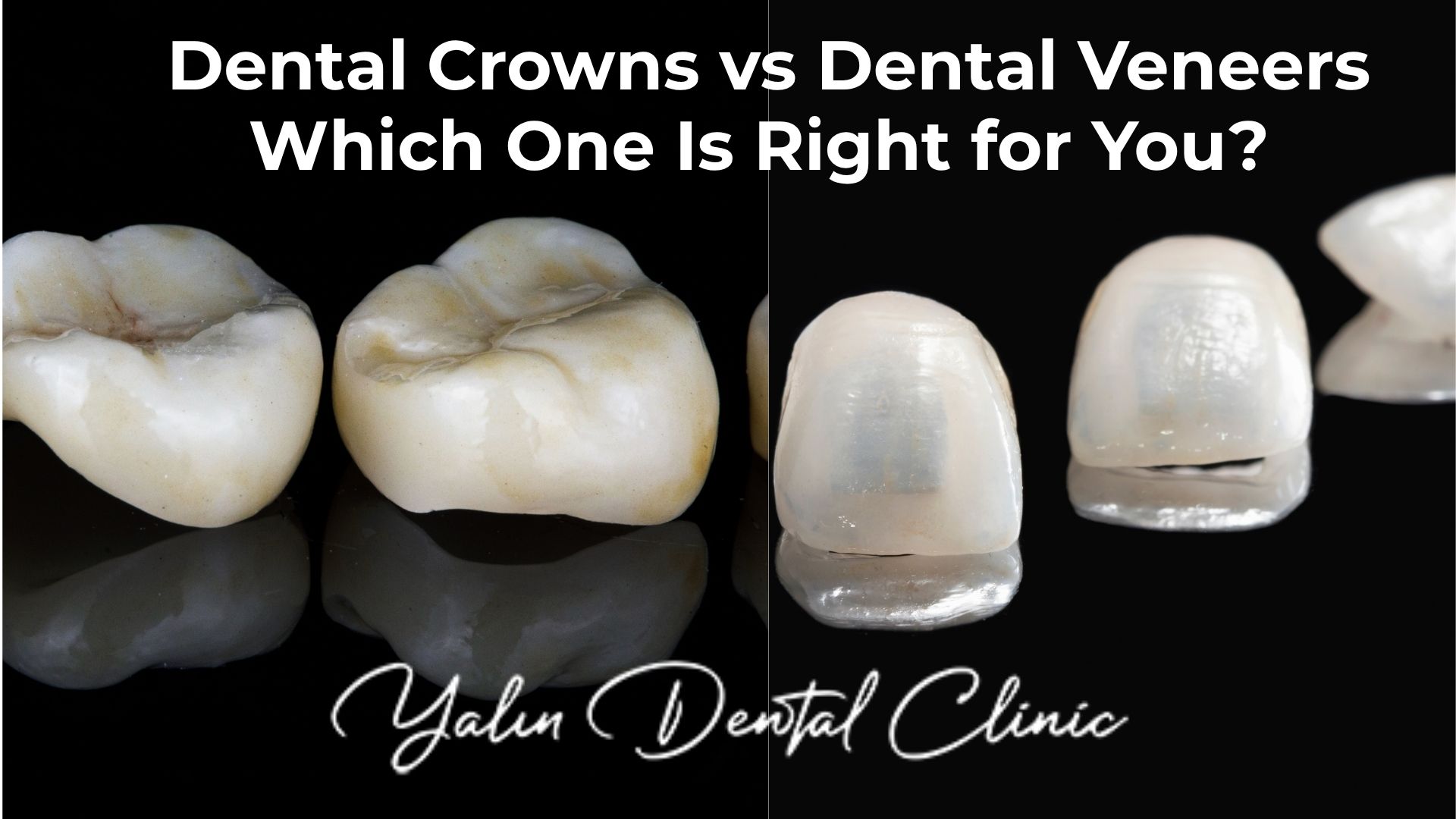
What Are Dental Crowns and Dental Veneers?
Crowns and veneers can both change the appearance of your teeth, but they serve very different purposes.
One covers most or all of the tooth, while the other mainly covers the front surface. Which one we use depends on what your tooth needs, not just how you want it to look.
What Is a Dental Crown?
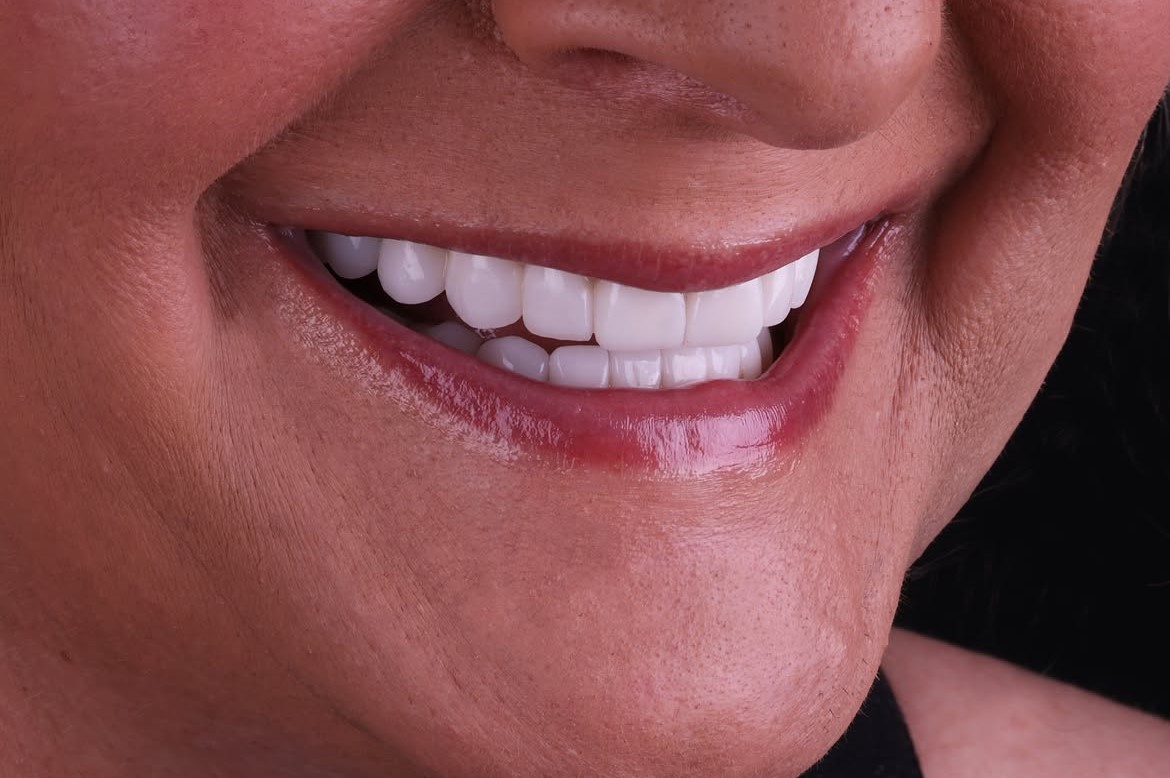
A dental crown is a cap that covers most or all of the visible part of a tooth.
We may use a crown if a tooth is weak, broken, heavily filled or badly worn. A crown can also improve the shape and colour of the tooth.
The main aim is to protect the tooth and help restore its normal appearance and function.
What Are the Types of Dental Crowns?
Dental crowns are made from different materials, and each material has its own advantages.
Porcelain crowns are commonly used for dental restorations. They can provide a natural appearance and are often considered for visible teeth.
Zirconia crowns offer another important advantage: they combine strength with a tooth-coloured appearance. For this reason, they can be used for both front and back teeth, depending on the individual case.
Porcelain-fused-to-metal (PFM) crowns have a metal base covered with porcelain. They are strong, but in some cases a dark metal edge may become visible near the gum line.
Metal crowns are another option. They are highly durable and may require less tooth reduction in some situations. However, because of their metallic colour, they do not provide a natural tooth-coloured appearance.
Resin crowns can be a more economical option, but they are generally less durable than ceramic or zirconia restorations and may wear or stain more easily.
What Is a Dental Veneer?
A dental veneer is a thin shell that covers the front surface of a tooth.
We use veneers to improve the colour, shape or size of teeth and, in suitable cases, to reduce the appearance of small gaps. They are often chosen for front teeth because they can provide a very natural appearance.
Unlike a crown, a veneer mainly covers the front surface of the tooth. Therefore, veneers usually require less tooth preparation than crowns.
What Are the Types of Dental Veneers?
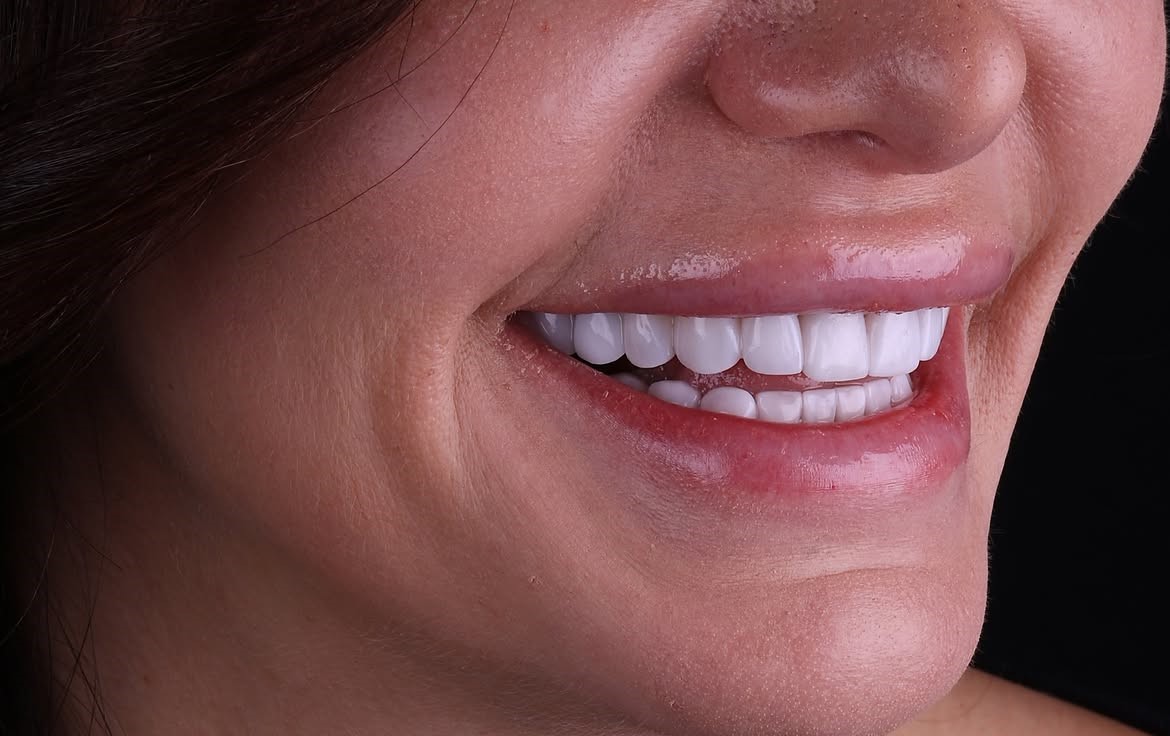
Porcelain veneers are a common choice for smile makeovers. They can provide a natural look and are generally resistant to staining.
Composite veneers are made from tooth-coloured resin. In many cases, the material can be shaped directly onto the tooth in a single visit. However, composite veneers may stain, chip or wear sooner than porcelain veneers.
No-prep or minimal-prep veneers are very thin restorations. In suitable cases, little or no enamel may need to be removed before they are placed.
Temporary veneers may sometimes be used while the final veneers are being prepared.
What Are the Differences Between Dental Crowns and Dental Veneers?
Dental Crown
A dental crown is a custom-made restoration that covers the entire visible part of a tooth. It can restore the tooth’s shape, strength, function, and appearance when a tooth is damaged, weakened, or significantly restored.
Dental Veneer
A dental veneer is a thin, custom-made shell bonded to the front surface of a tooth to improve its shape, colour, size, or overall appearance. Veneers are primarily used for cosmetic smile enhancement.
Crowns and veneers can both improve the appearance of a tooth, but they are not used in the same way. A crown provides greater coverage and protection, while a veneer mainly changes the visible front surface of the tooth.
| Feature | Dental Crown | Dental Veneer |
|---|---|---|
| Coverage | Covers most or all of the visible tooth | Covers mainly the front surface |
| Main Use | Protects weak, broken or badly damaged teeth | Improves colour, shape, size or the appearance of small gaps |
| Tooth Preparation | Usually requires more tooth preparation | Usually requires less tooth preparation |
| Strength | Provides greater coverage and support for a weakened tooth | Usually more suitable for teeth that are structurally healthy |
| Where We Use It | Front or back teeth | Mostly front teeth |
| Appearance | Modern ceramic crowns can provide a natural appearance | Often chosen for natural-looking cosmetic smile improvements |
| Best For | Damage, large fillings, cracks or significant tooth wear | Cosmetic changes and minor shape or colour concerns |
What's Involved With Getting a Dental Crown?
The general dental crown procedure usually involves the following steps.
First, we examine your tooth and may take an X-ray to evaluate the tooth, its root and the surrounding bone.
Before treatment begins, local anaesthesia is normally used to numb the area. You remain awake during the procedure, but the anaesthetic is intended to keep the treatment comfortable.
We then prepare the tooth by removing a controlled amount of tooth structure so that there is enough space for the crown to fit correctly.
If the tooth is badly broken or contains a large filling, part of the tooth may first need to be rebuilt to provide adequate support for the crown.
Next, we take a digital scan or conventional impression of the prepared tooth. We also select an appropriate shade so that the crown matches the surrounding teeth as closely as possible.
While the crown is being made in a dental laboratory, a temporary crown may be placed to protect the prepared tooth.
At the next appointment, the temporary crown is removed and the final crown is tried in. We check its shape, colour, fit and the way your teeth meet when you bite.
Once the fit and bite are satisfactory, the crown is fixed onto the tooth using dental cement or another appropriate dental bonding material.
What's Involved With Getting a Dental Veneer?
Getting a dental veneer has some similarities to getting a crown, but an important difference is the amount of tooth structure that needs to be prepared.
For a veneer, we usually prepare only the front surface of the tooth rather than reducing the tooth around all sides. In some suitable cases, only a very small amount of enamel may need to be removed.
An impression or digital scan is then taken so that the veneer can be designed to fit the tooth. Once the final veneer is ready, we check its shape, shade and fit before bonding it securely to the tooth.
Compared with a conventional crown, veneer treatment is generally more conservative because more of the natural tooth structure can usually be preserved.
Dental Crowns vs Veneers: Which One Is Right for Me?
If you have a weak, cracked, heavily filled or badly damaged tooth, a crown may be the more appropriate choice because it provides greater coverage and protection.
If your tooth is structurally healthy and your main concern is its colour, shape, size or the appearance of a small gap, a veneer may be considered.
A simple way to understand the difference is that crowns are generally used when a tooth needs more structural protection, while veneers are primarily used for cosmetic improvement.
However, the correct treatment can only be determined after a dentist examines your teeth, bite, enamel and overall oral health.
How Much Do Crowns and Veneers Cost in Turkey? Which One Is More Expensive?
In Turkey, a zirconia crown may cost approximately €150–€300 per tooth, while E-max or porcelain veneer may cost approximately €180–€400 per tooth.
Based on these approximate ranges, zirconia crowns may be less expensive per tooth than porcelain or E-max veneers in some clinics.
However, the final price depends on the material used, the clinic, the complexity of treatment and the number of teeth being treated.
Is It Better to Get Crowns or Veneers?
Neither treatment is universally better than the other. Veneers are generally more suitable for structurally healthy teeth when the main goal is cosmetic improvement, while crowns may be more appropriate when a tooth also needs greater strength, coverage and protection.
The best option therefore depends on the condition of your natural teeth, your bite and your treatment goals.
What Are the Pros and Cons of Veneers and Crowns?
Veneers – Pros
- Can provide a very natural appearance.
- Usually require less tooth preparation than crowns.
- Useful for selected colour and shape changes.
- Can reduce the appearance of small gaps in suitable cases.
- Porcelain veneers are generally resistant to staining.
Veneers – Cons
- Not usually suitable for severely damaged or weakened teeth.
- Can chip, fracture or become loose.
- Some types of damage may require replacement rather than repair.
- They may not be suitable for every bite or every patient.
- Conventional veneer treatment may be irreversible if enamel has been removed.
Crowns – Pros
- Provide extensive coverage for weak or damaged teeth.
- Can be made from strong and durable materials.
- Can be suitable for teeth with large fillings.
- Can improve the shape and colour of a tooth as well as its function.
- Can be used on both front and back teeth, depending on the material and clinical situation.
Crowns – Cons
- Usually require more tooth preparation than veneers.
- Temporary sensitivity may occur after treatment.
- Crowns may eventually require repair or replacement.
- Treatment can be more extensive than veneer treatment.
Aftercare for Dental Crowns and Veneers
During the first day, be careful with your newly treated tooth. If your mouth is still numb after local anaesthesia, it is generally better to wait until the numbness has worn off before eating to reduce the risk of accidentally biting your cheek or tongue.
Continue brushing your teeth as usual, but be gentle around the gum line if the area feels sensitive during the first few days. You should also continue cleaning between your teeth using floss or another interdental cleaning method recommended by your dentist.
Avoid biting extremely hard foods or objects with crowns or veneers. Ice, very hard sweets and using your teeth to open packages can increase the risk of damaging restorations.
If you grind or clench your teeth, your dentist may recommend wearing a night guard to help protect your teeth and restorations.
Mild sensitivity can occur after treatment and often settles. However, if the tooth continues to hurt, your bite feels unusually high, or the crown or veneer feels loose, contact your dentist for an examination.
Regular dental examinations and good oral hygiene are also important for maintaining the health of the teeth, gums and restorations.
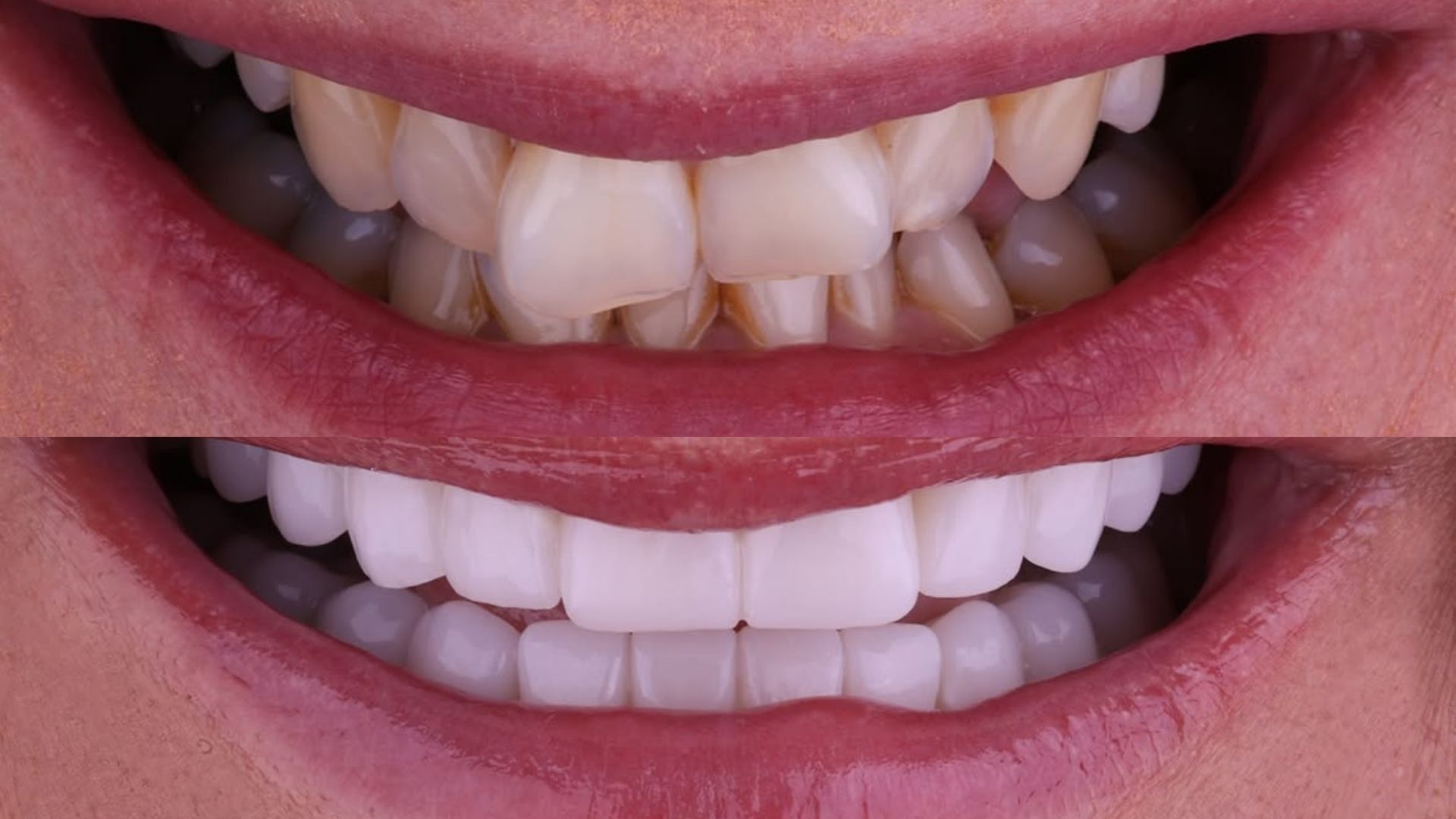
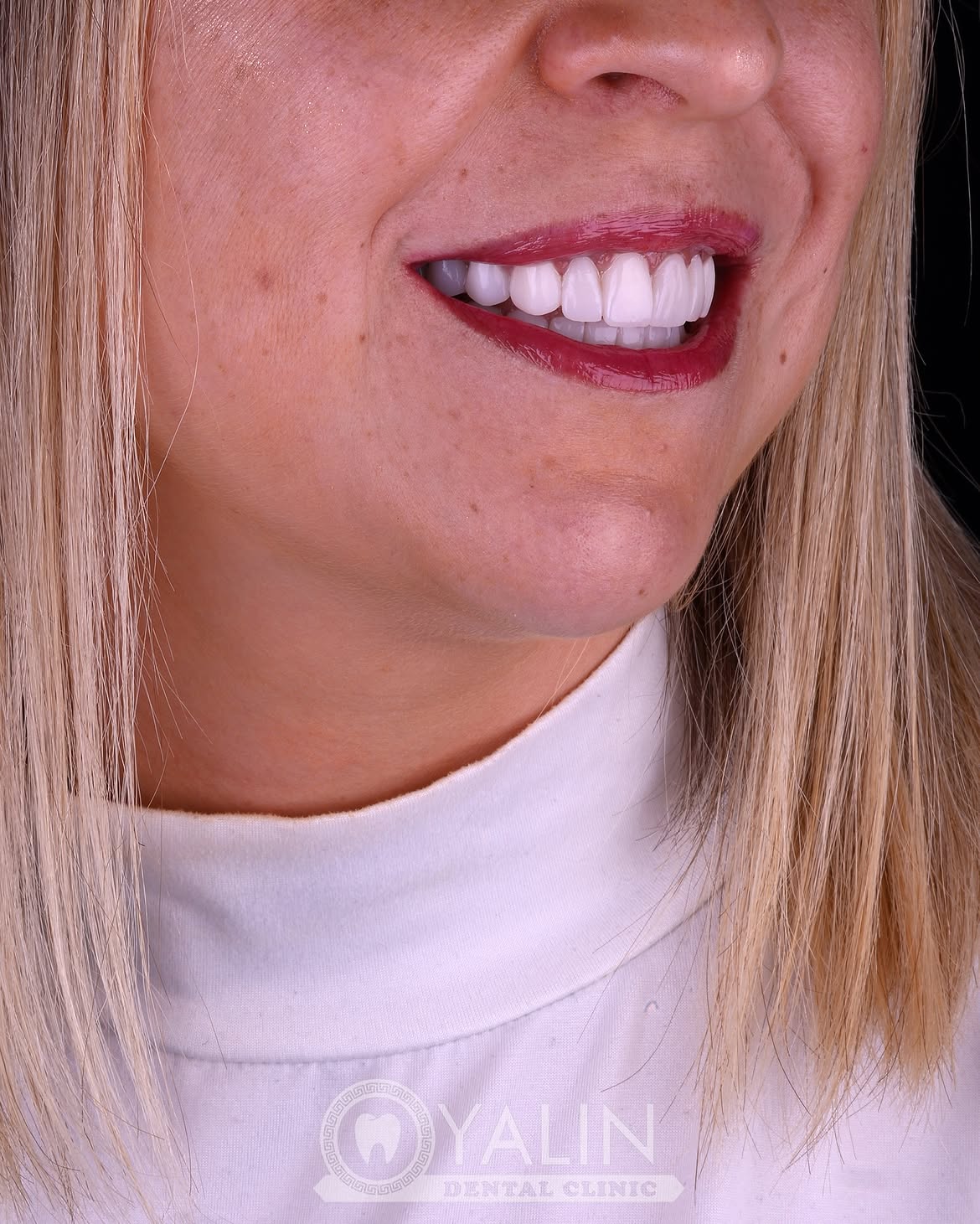
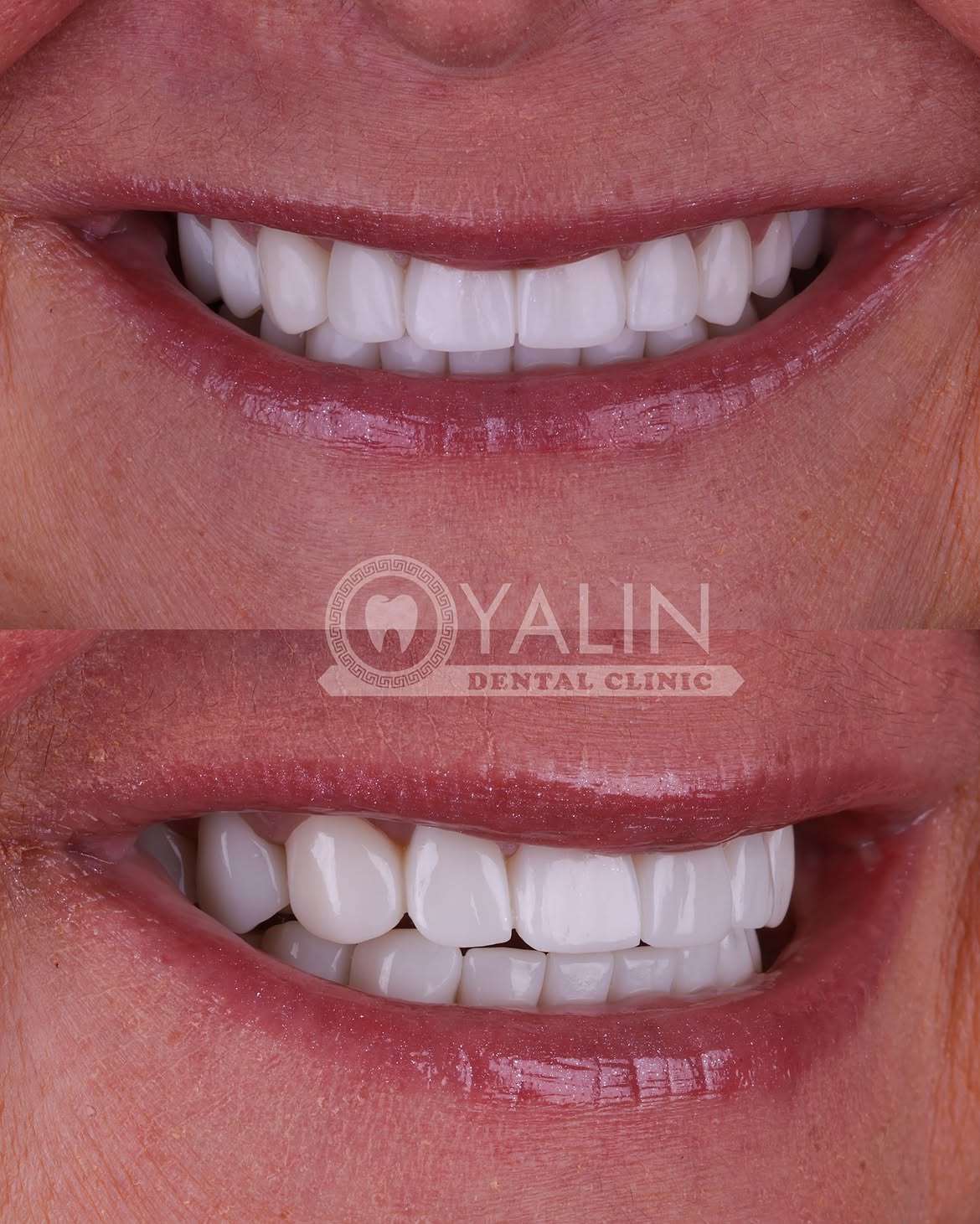
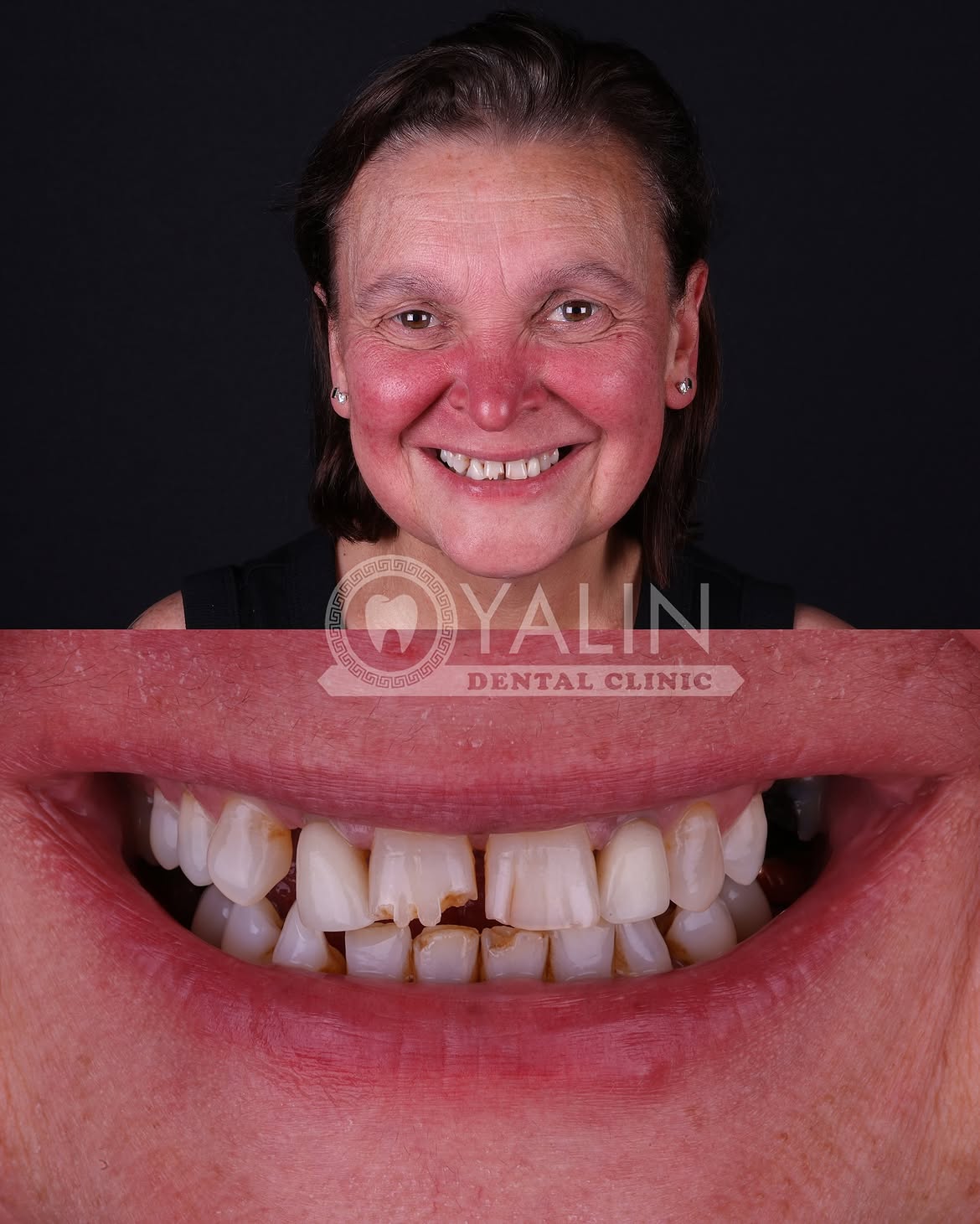
Dental Crowns Before and After in Antalya, Turkey

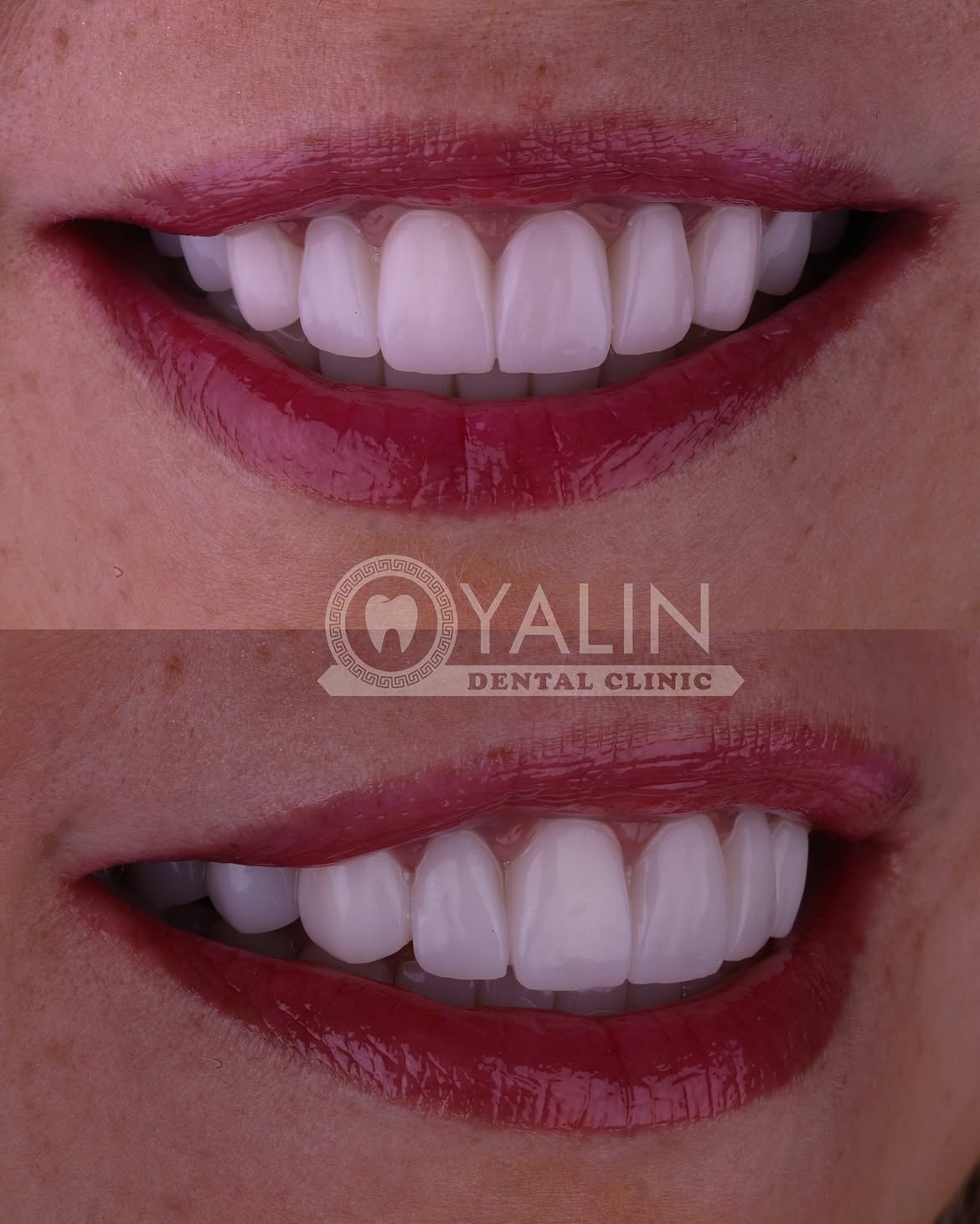
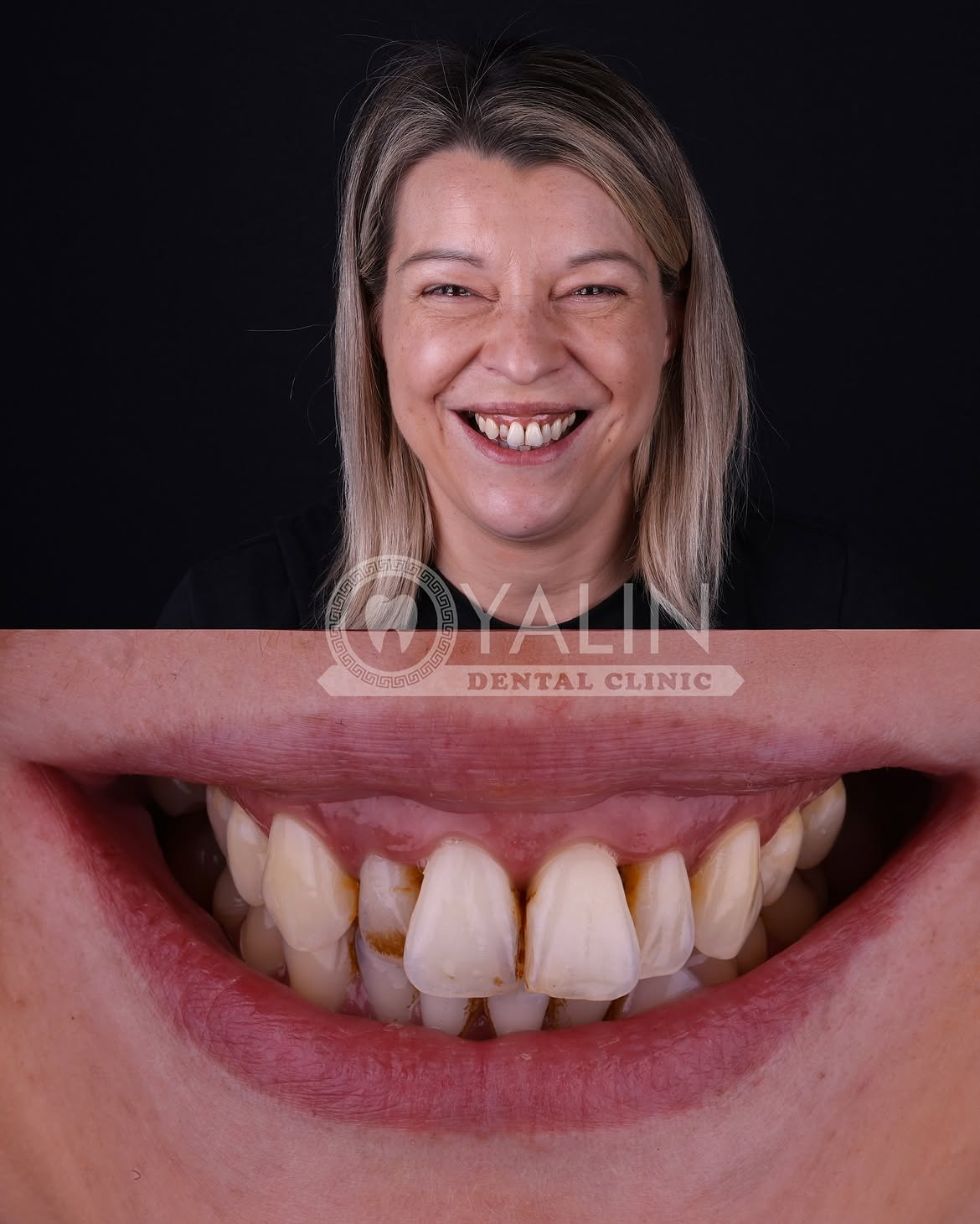


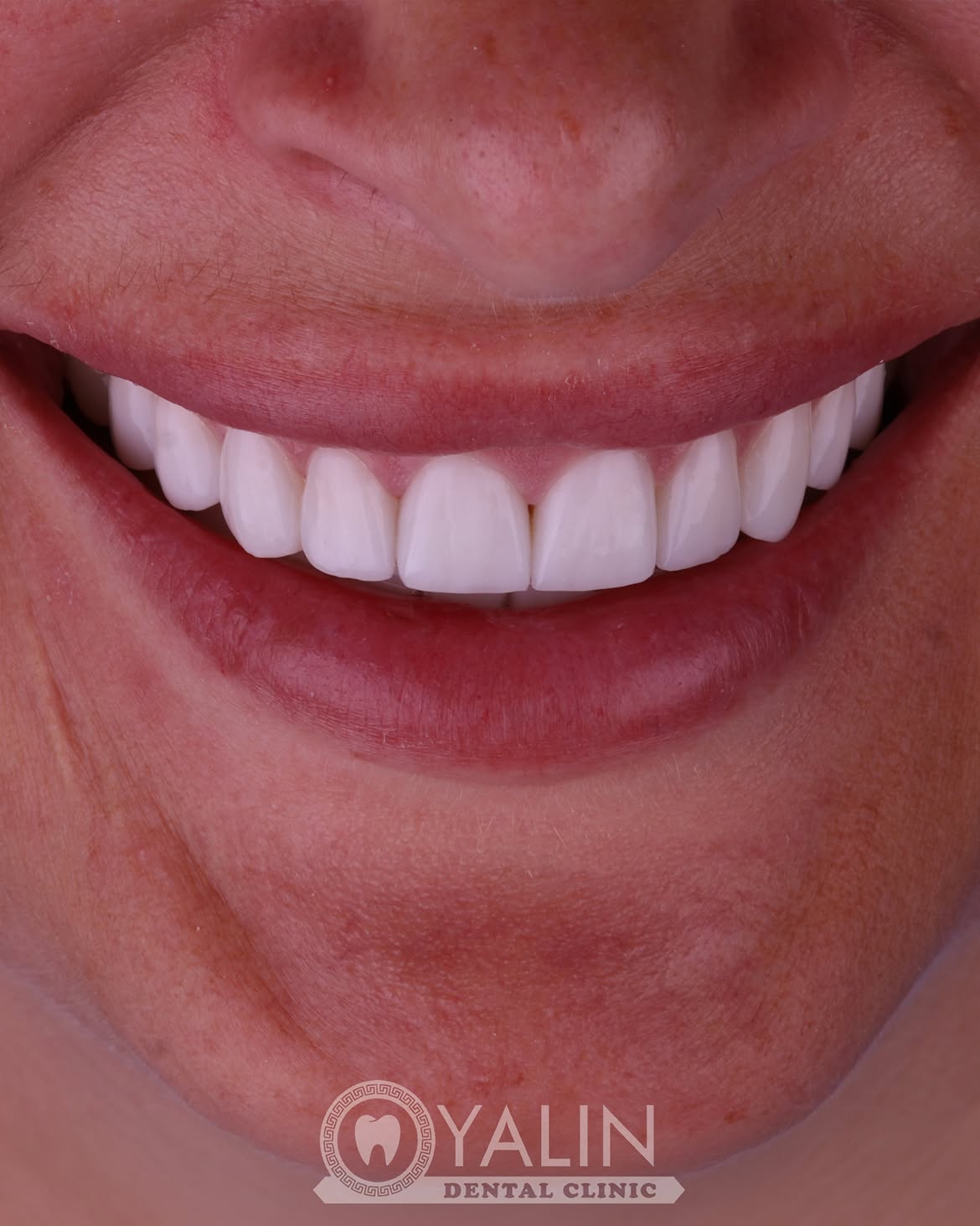
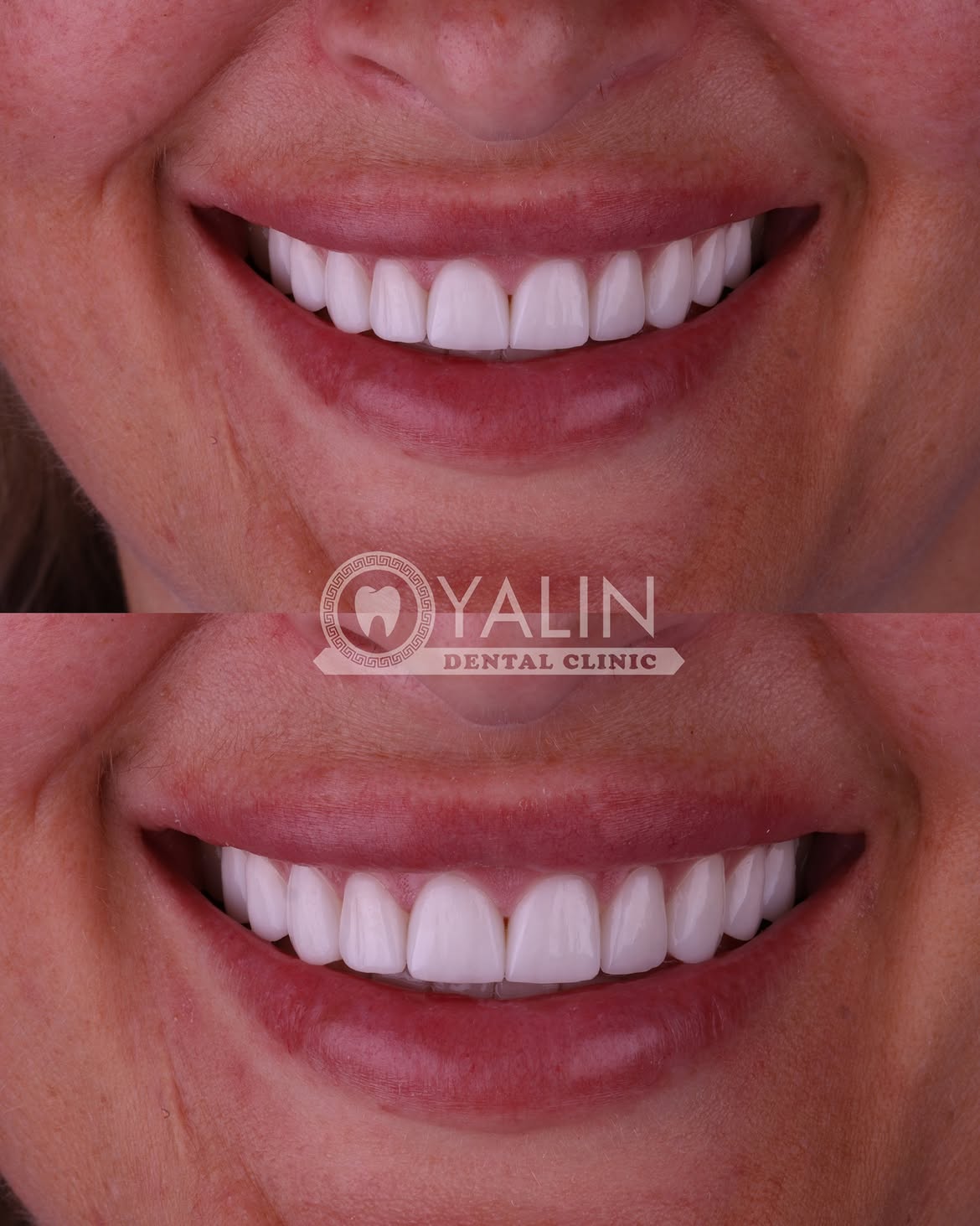
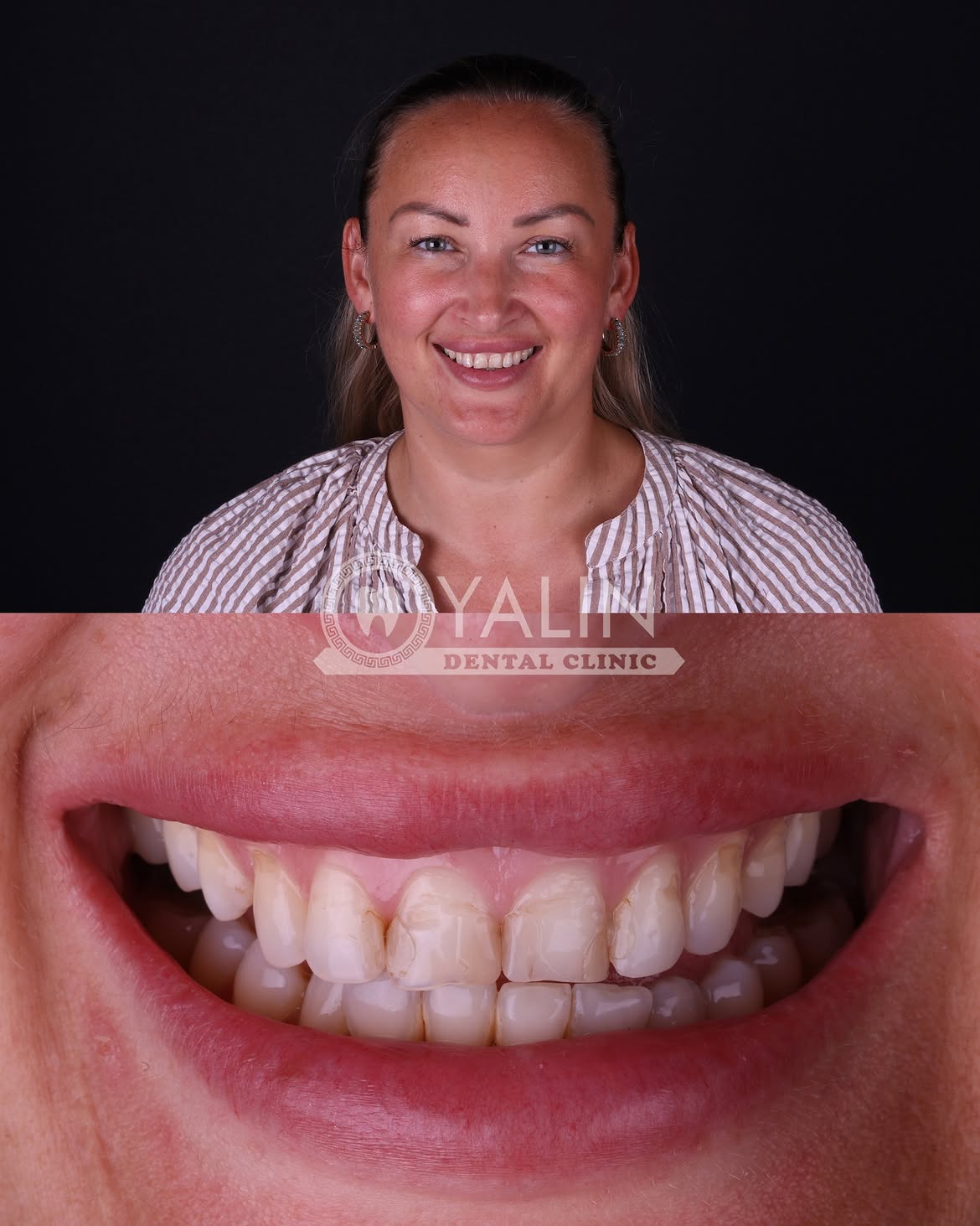


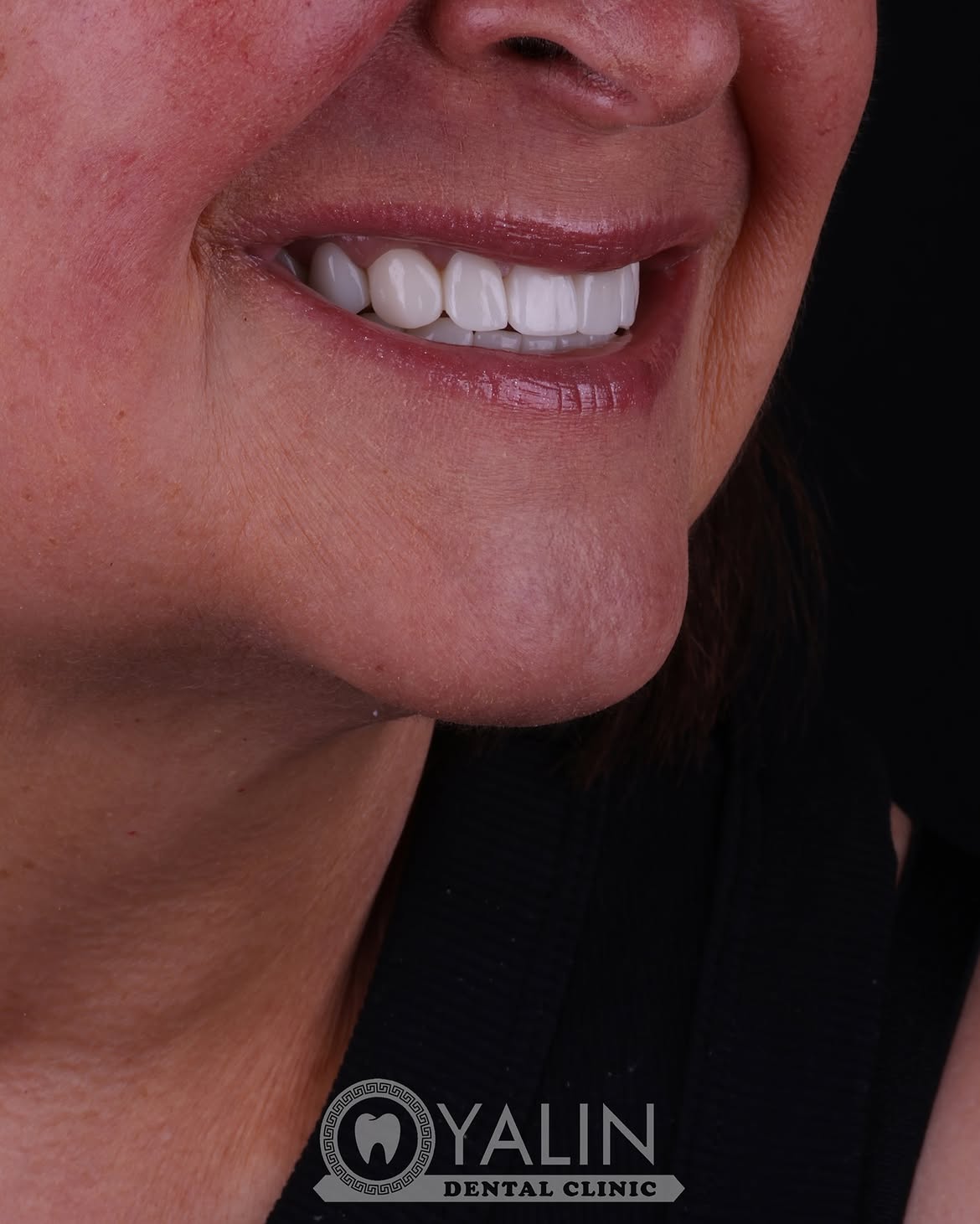

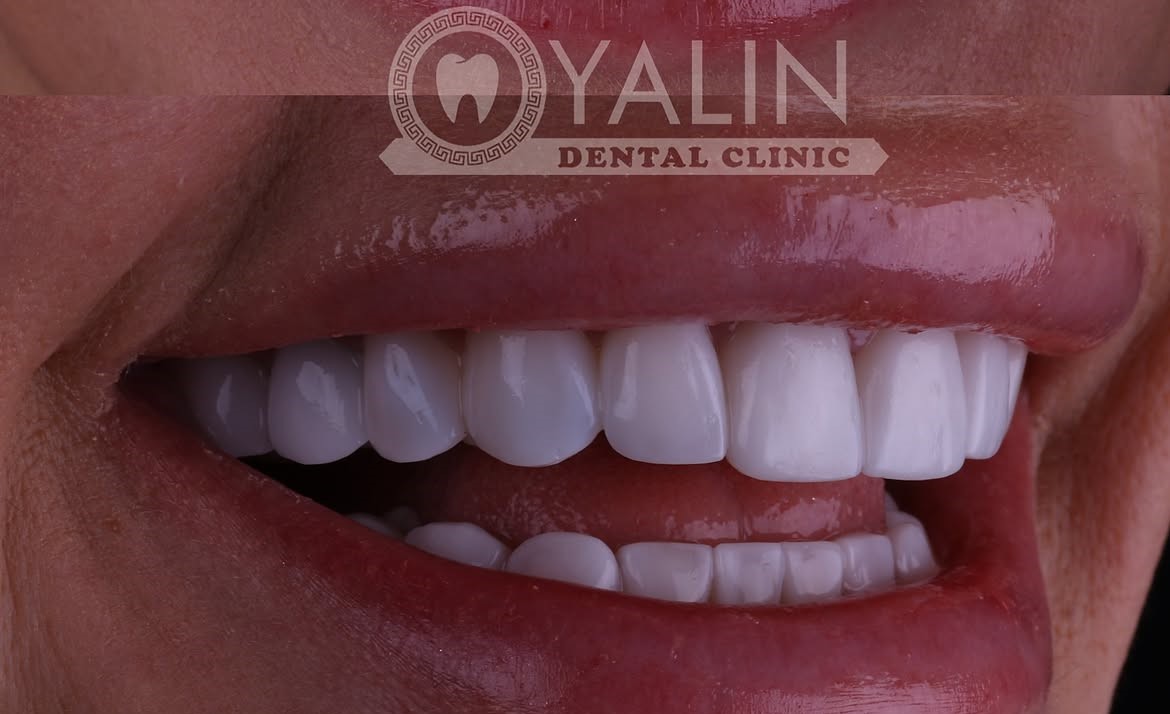
Dental Veneers Before and After in Antalya, Turkey
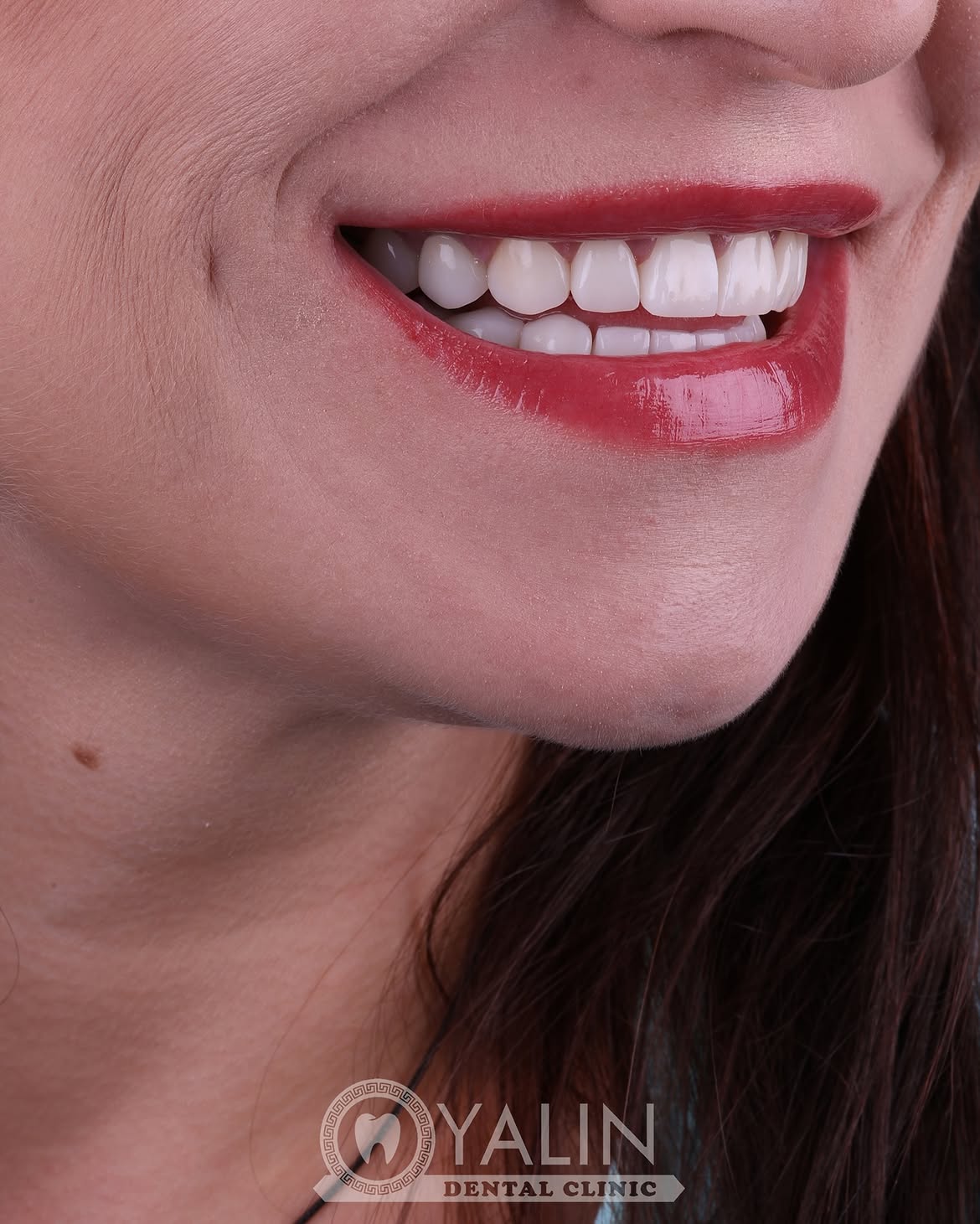
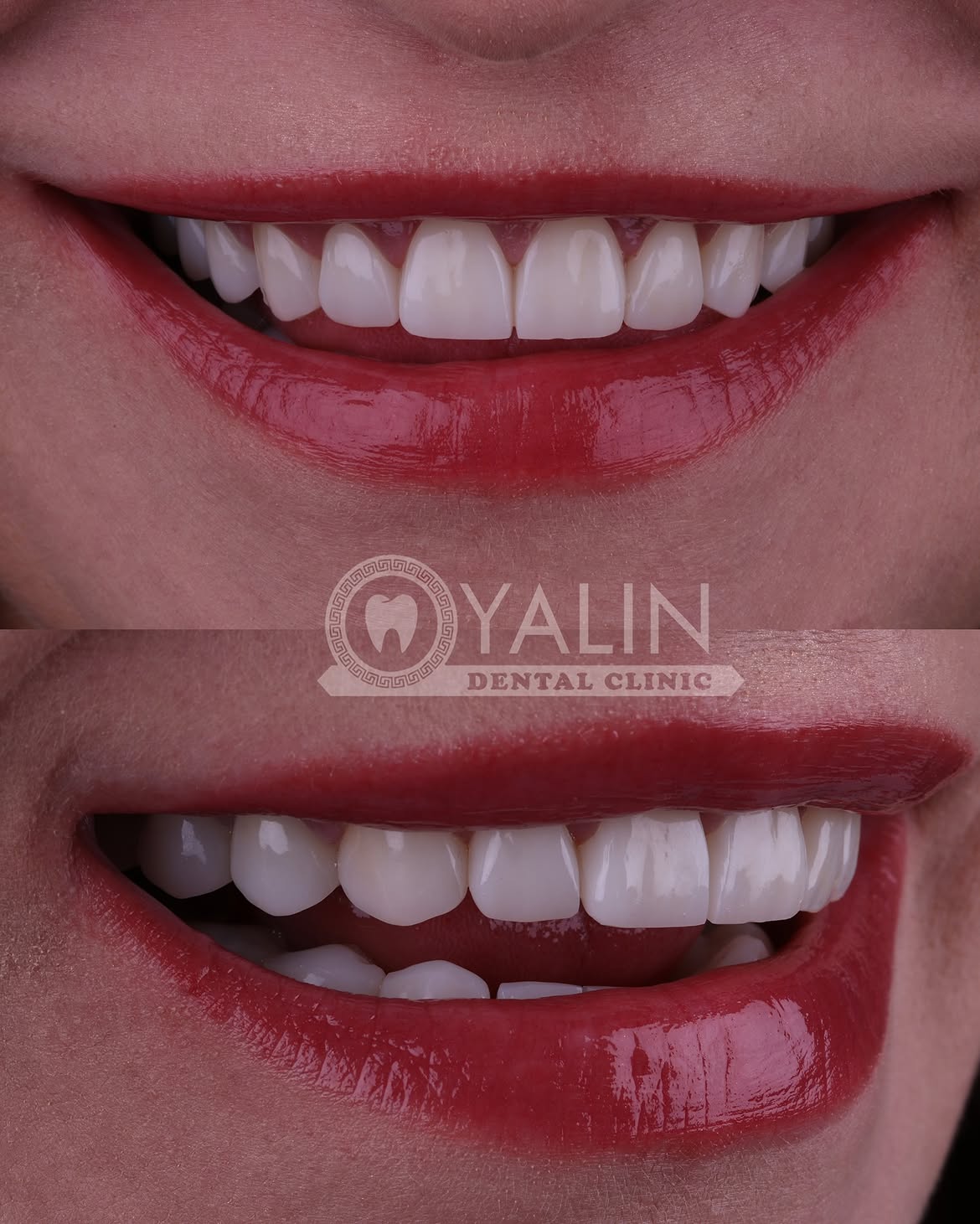
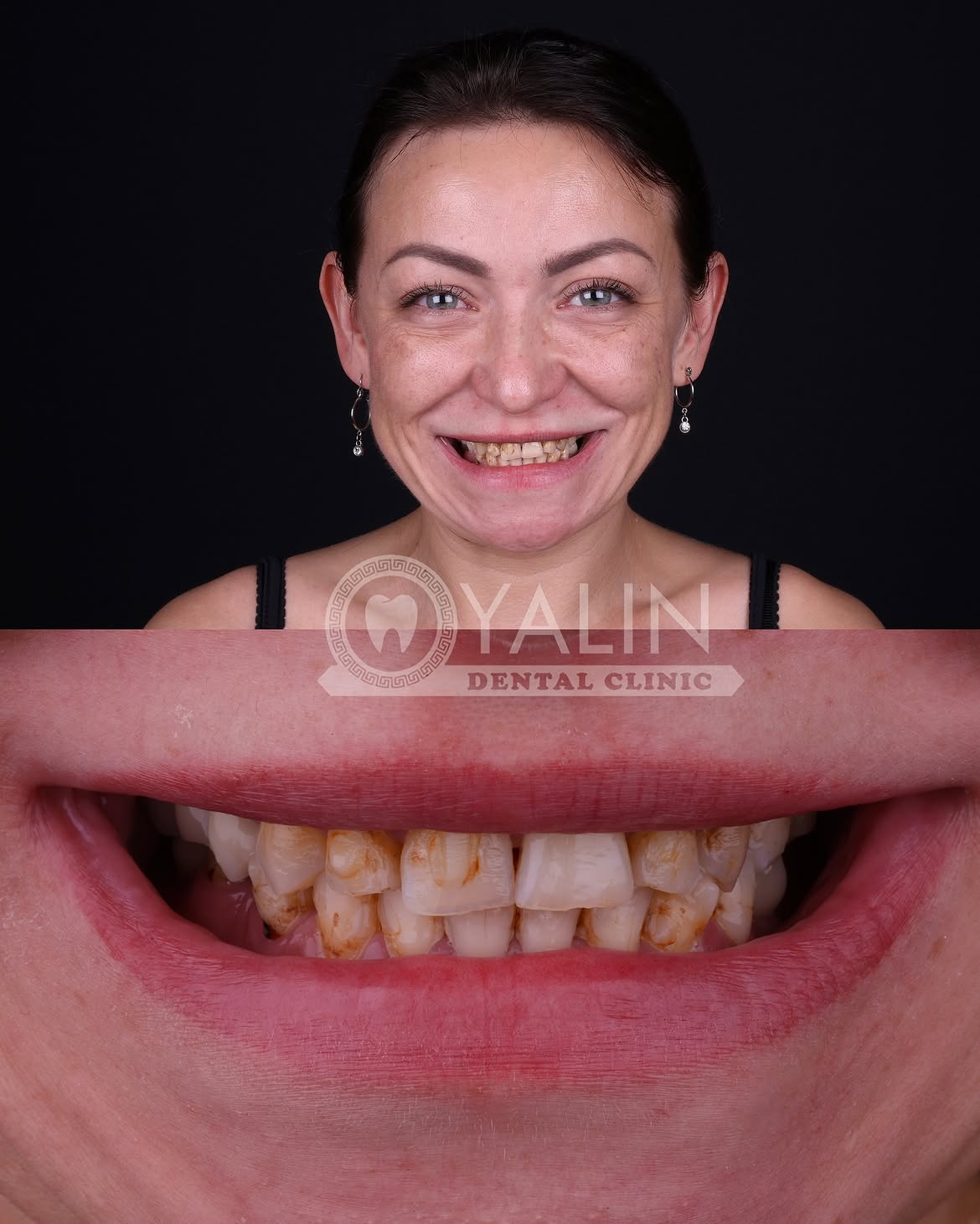

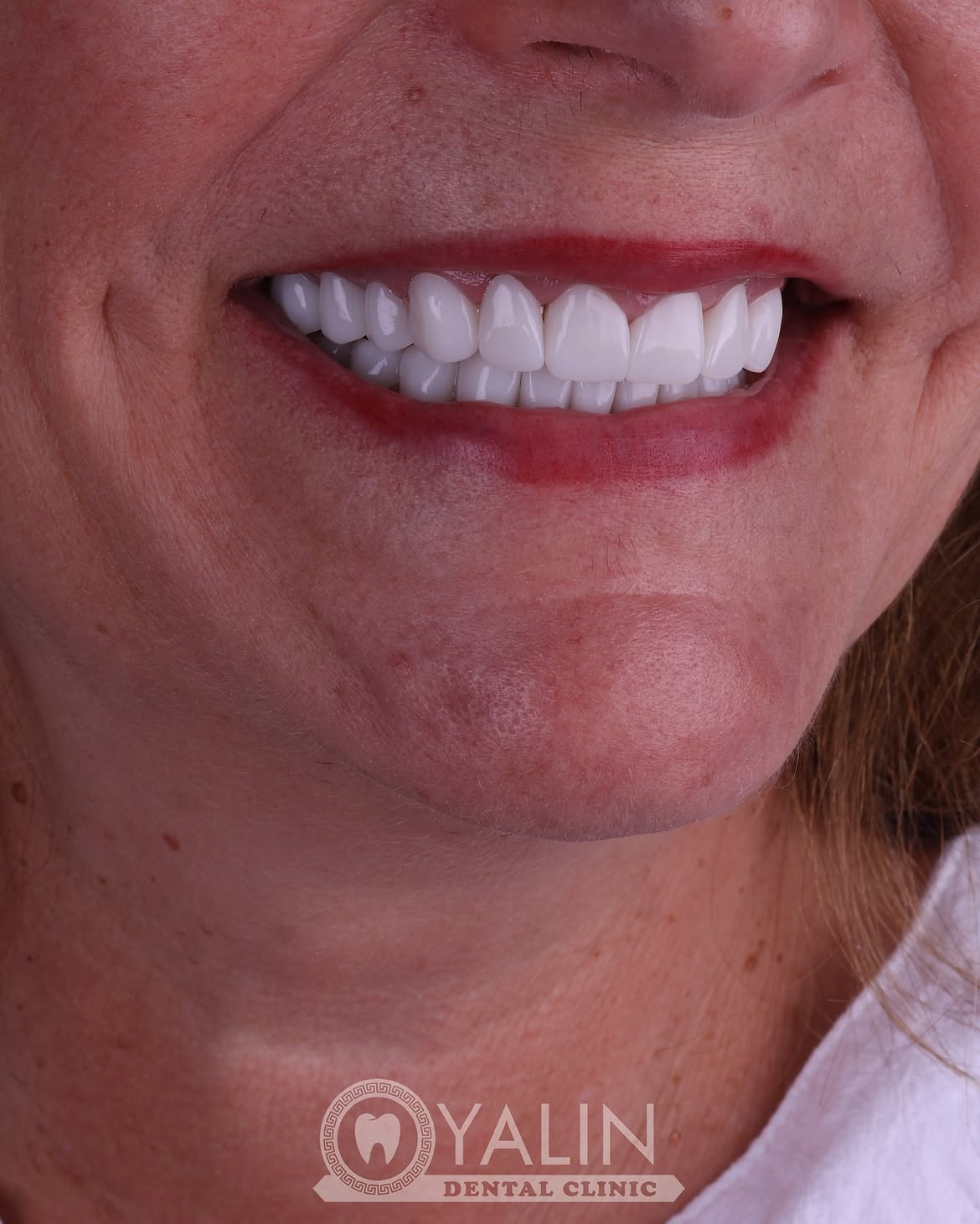
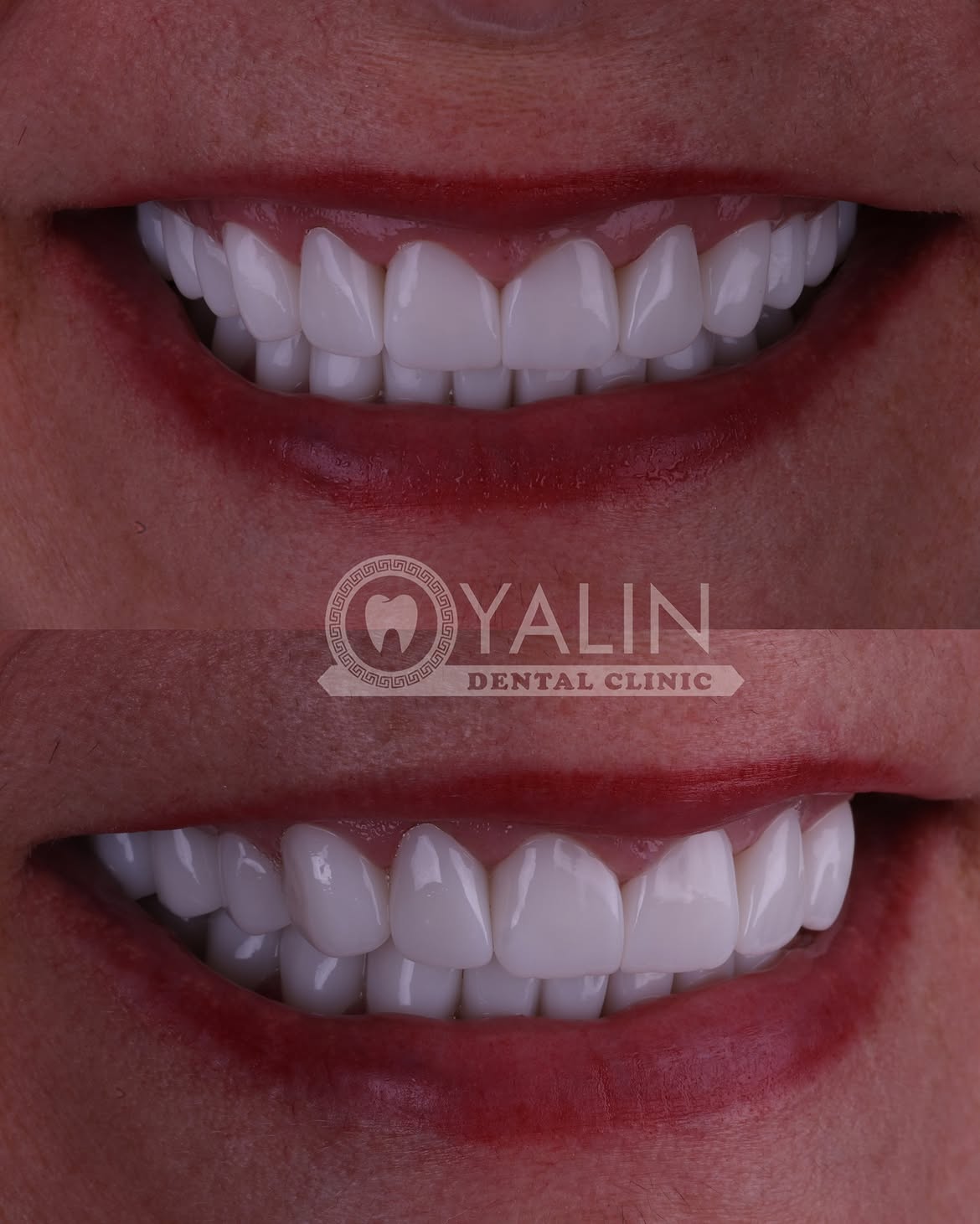
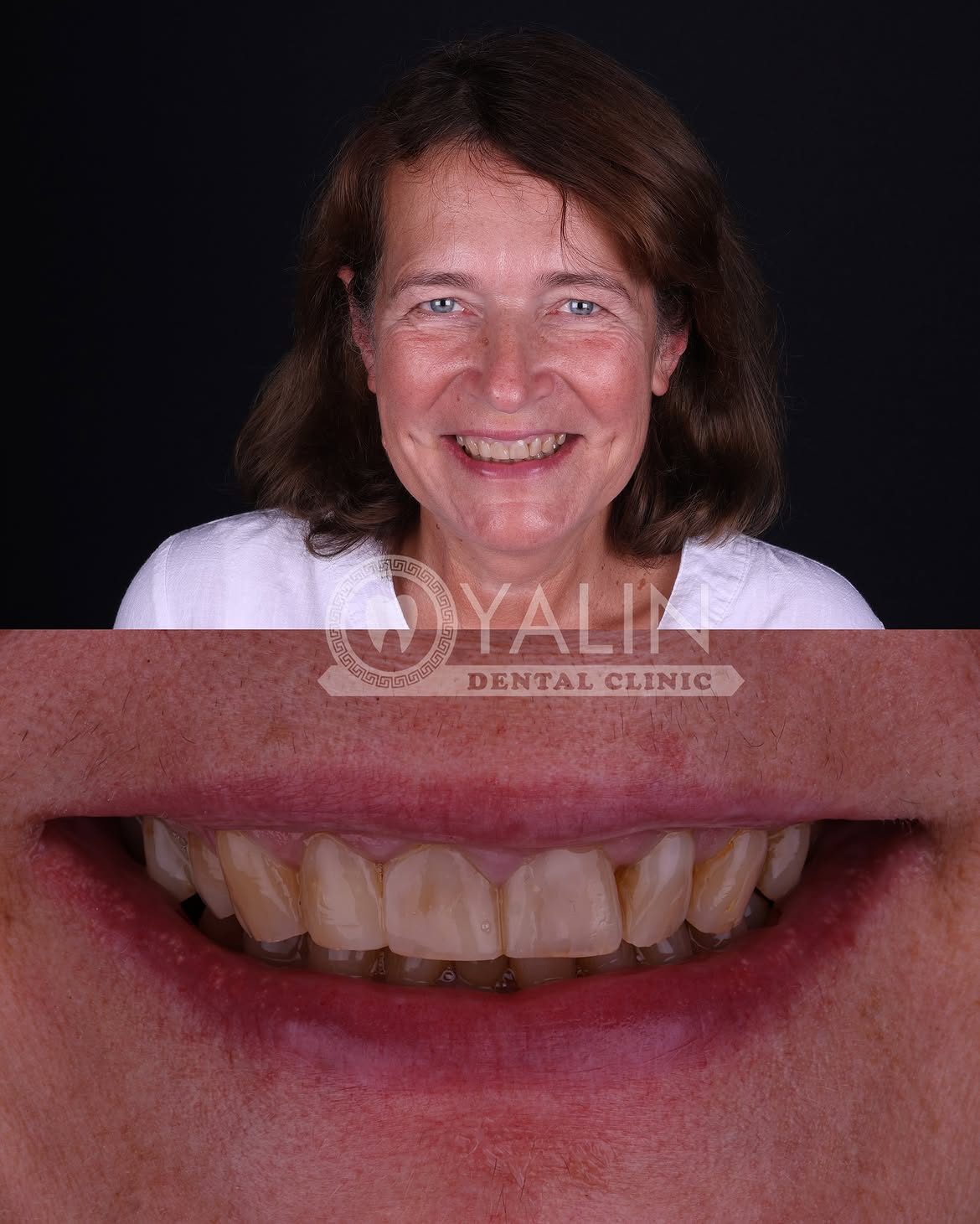

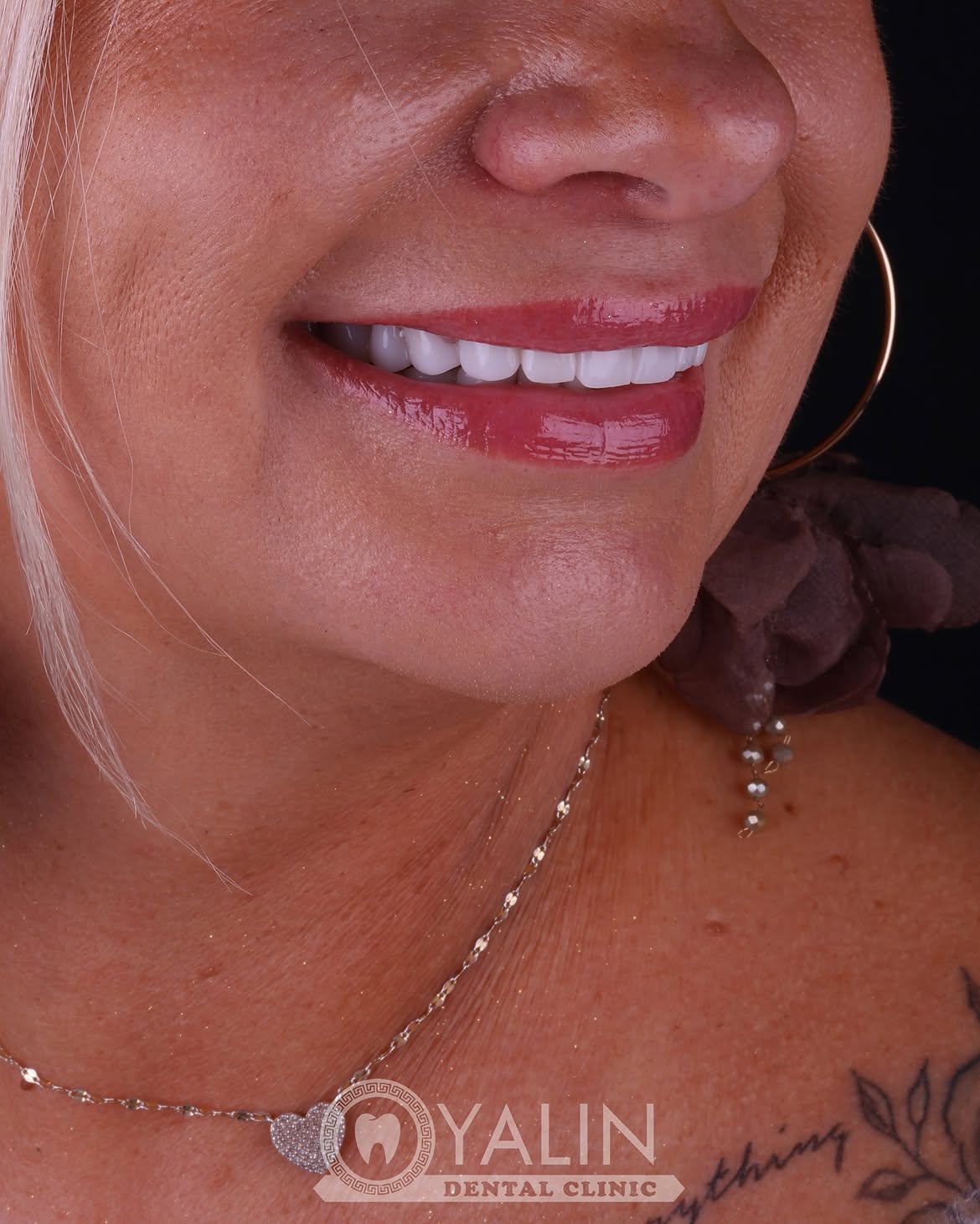
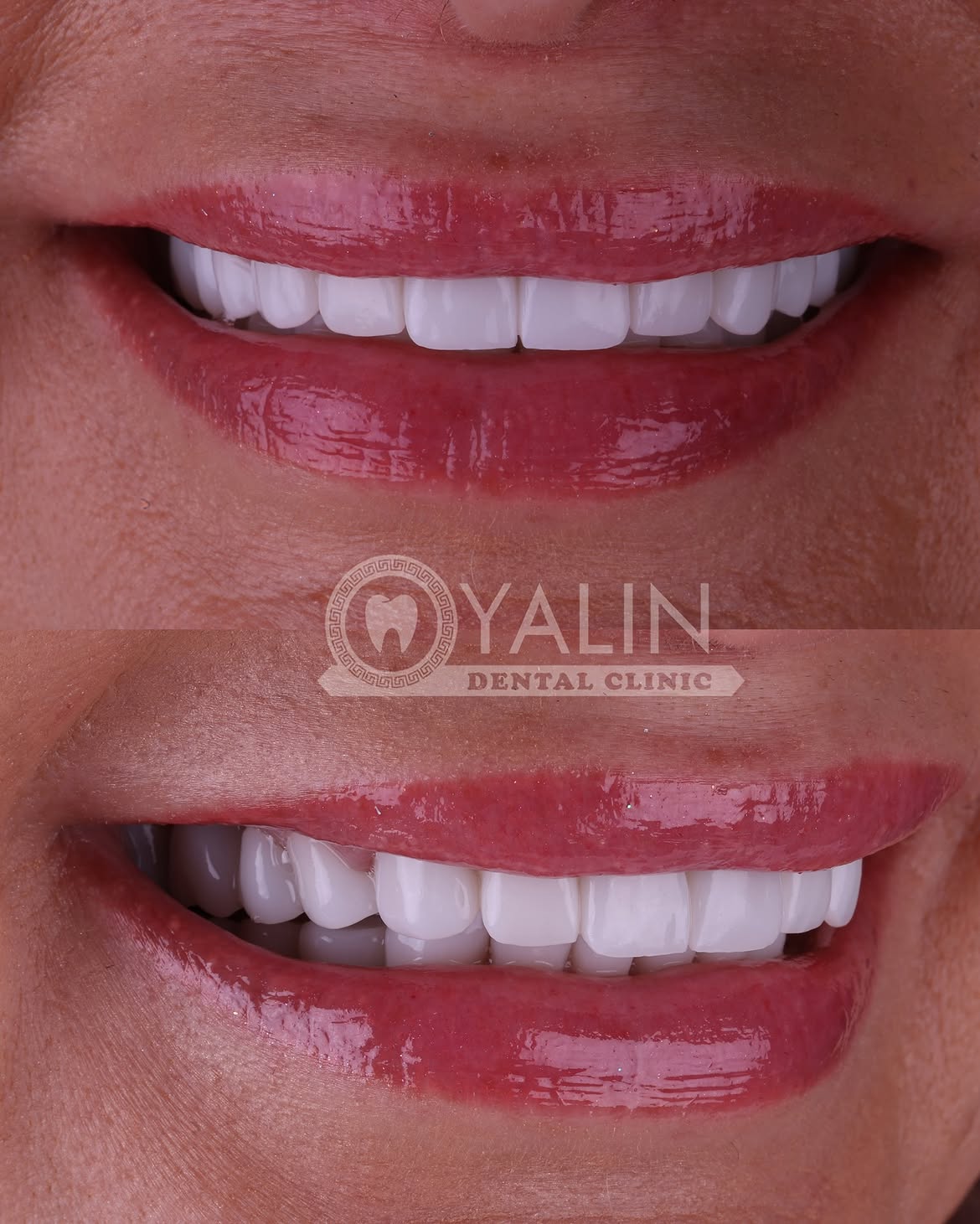
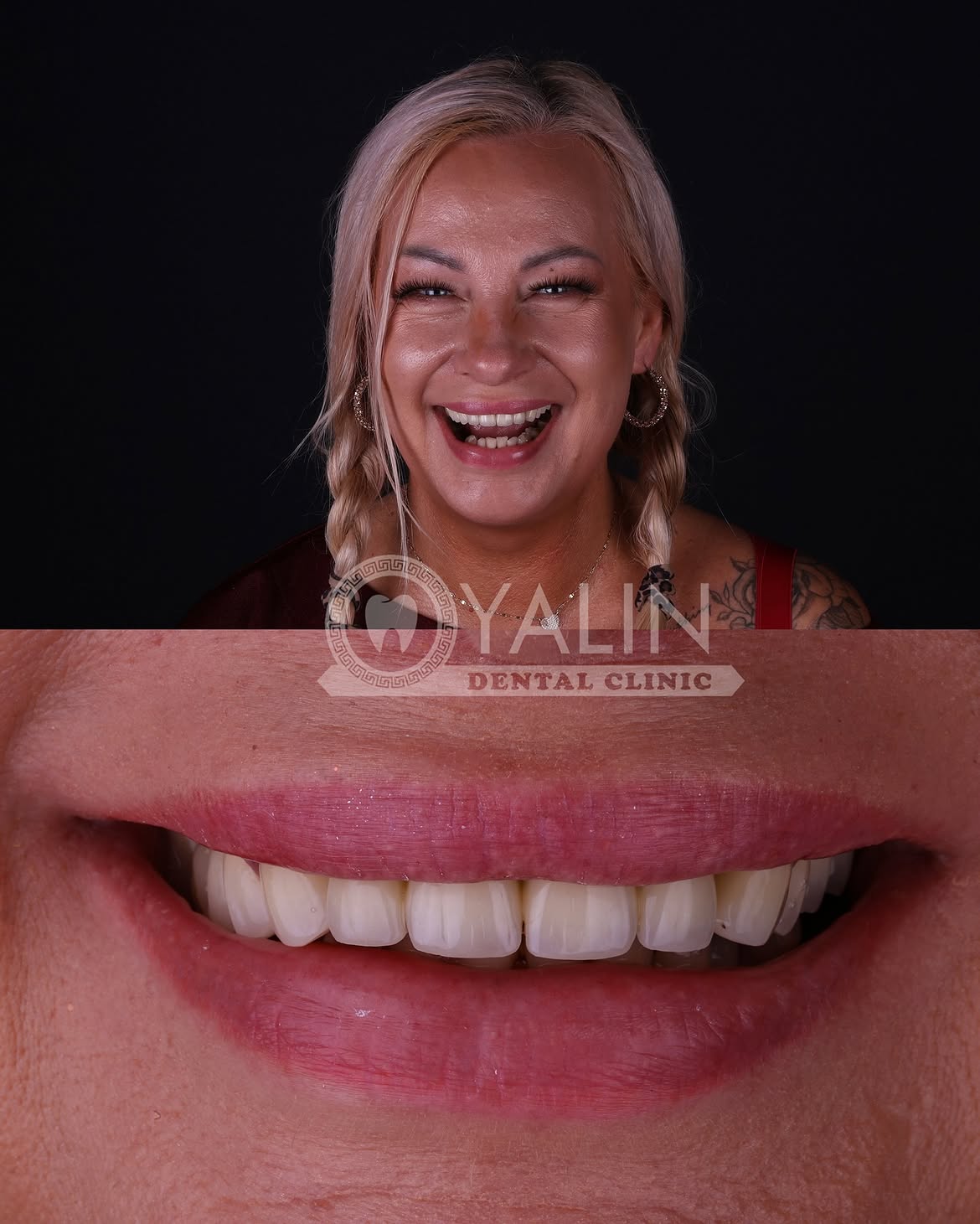

Before and after photographs can help patients understand the type of results that may be achieved with dental crowns.
Note
- Before and after images were taken in the same clinical environment and under the same technical conditions.
- Written and explicit patient consent has been obtained.
- This content is shared for informational purposes only.
- Results may vary from person to person.
Frequently Asked Questions
Which Treatment Is More Durable, Dental Crowns or Dental Veneers?
Crowns generally provide greater coverage and structural protection because they cover most or all of the visible tooth. However, the lifespan of both crowns and veneers depends on the material used, the condition of the tooth, oral hygiene, bite forces and habits such as teeth grinding.
Does Getting a Dental Crown or Veneer Hurt?
Local anaesthesia is usually used when tooth preparation is required, so patients should not normally feel pain during the procedure. Some temporary sensitivity or gum tenderness may occur afterwards.
How Long Does the Treatment Take for Dental Crowns and Dental Veneers?
Laboratory-made crowns and veneers commonly require two or more appointments. Depending on the clinic, laboratory and individual treatment plan, the process may take approximately one to two weeks. Some clinics with same-day CAD/CAM technology may be able to complete selected restorations more quickly.
Who Is a Candidate for Crowns and Veneers?
You may be a suitable candidate for dental veneers if:
- Your teeth are generally healthy and structurally sound.
- You want to improve their colour, shape or size.
- You have small gaps that may be cosmetically improved with veneers.
- Your teeth are slightly worn or chipped.
- You have sufficient healthy enamel for predictable bonding.
- Your bite and oral health are suitable for veneer treatment.
You may be a suitable candidate for dental crowns if:
- Your tooth is weak or cracked.
- You have a very large filling.
- Your tooth is significantly worn.
- Part of the tooth is broken.
- You have had root canal treatment and the tooth requires additional protection.
- The tooth requires greater structural support and coverage.
If you would like to learn more about dental crowns and veneers receive a personalised treatment plan and quotation, contact our team today to arrange your consultation.