







You've finally decided to replace that missing tooth. Then your dentist looks at the X-ray and says the words nobody wants to hear: "You don't have enough bone."
It's a common moment, and it often feels like the end of the road. Usually it isn't. In this guide, we'll explain what bone loss means for dental implants, the treatments that can help, and how long and how much it all might take.
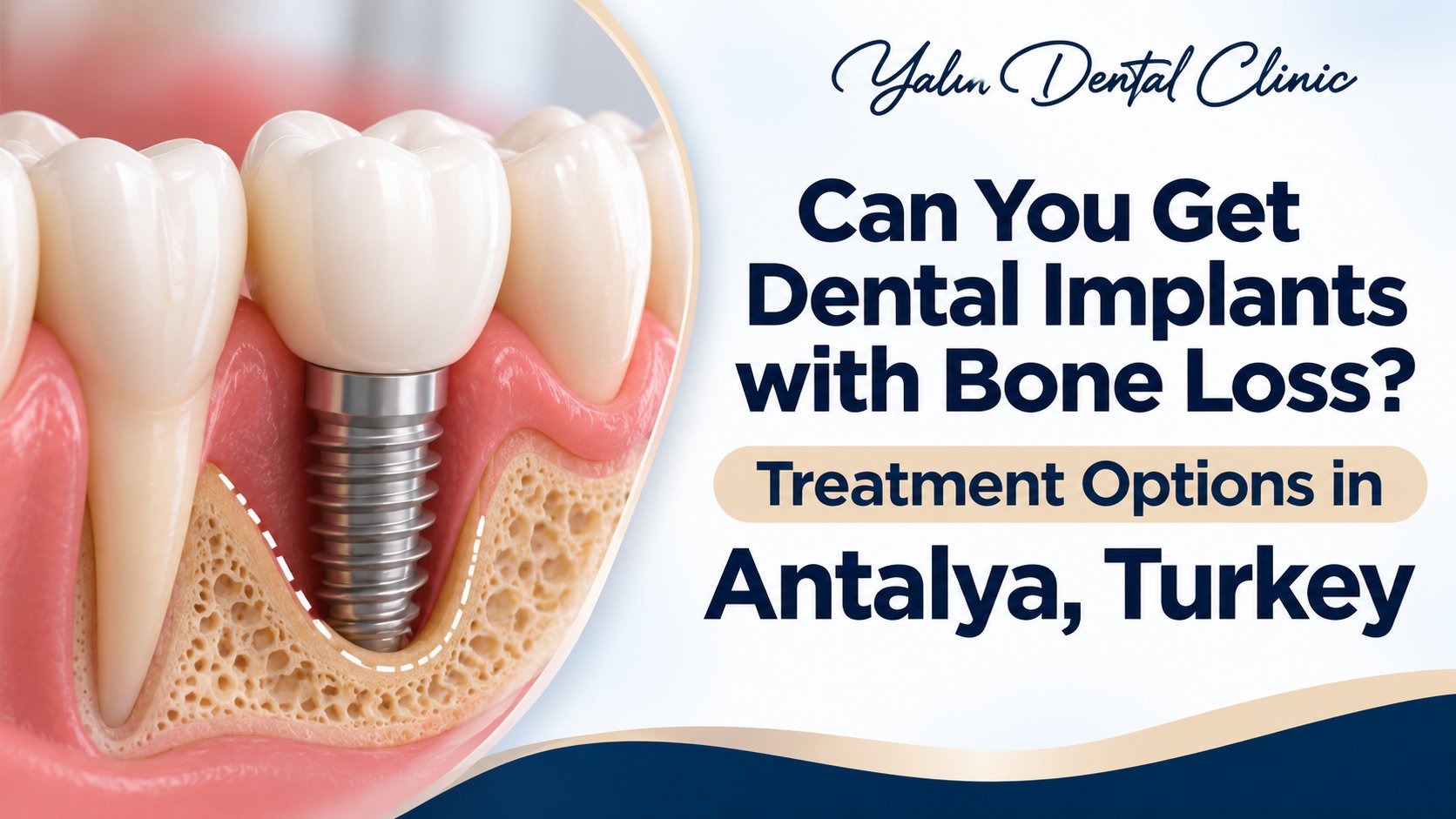
Can You Still Get Dental Implants If You Have Bone Loss?
In many cases, yes.
An implant needs enough healthy bone to hold it firmly, a bit like a fence post needs solid ground. If the bone has thinned, a dentist can often rebuild it, work around it, or use a different implant approach. What's right for you depends on how much bone is missing and where.
What Causes Jawbone Loss?
The most common cause is simply losing a tooth. Without a root to stimulate it, the bone in that area slowly shrinks, and the longer a gap is left, the more bone may be lost.
Other causes include gum disease, long-term denture wear, infection, injury, and some people just naturally have thinner bone. If gum disease is part of your story, our guide to dental implants with periodontal disease is worth a read.
How Do You Know If You Have Enough Bone for Dental Implants?
You can't tell by looking in the mirror. A standard X-ray gives an initial overview, while a 3D scan can help your dentist assess bone height and width and locate nearby nerves and sinuses. Bone quality is assessed alongside the examination and other clinical findings.
At Yalın Dental Clinic, a panoramic X-ray or 3D tomography is part of your consultation. It lets us plan where an implant can go and whether you need any extra treatment first.
Dental Implant Options for Patients with Bone Loss
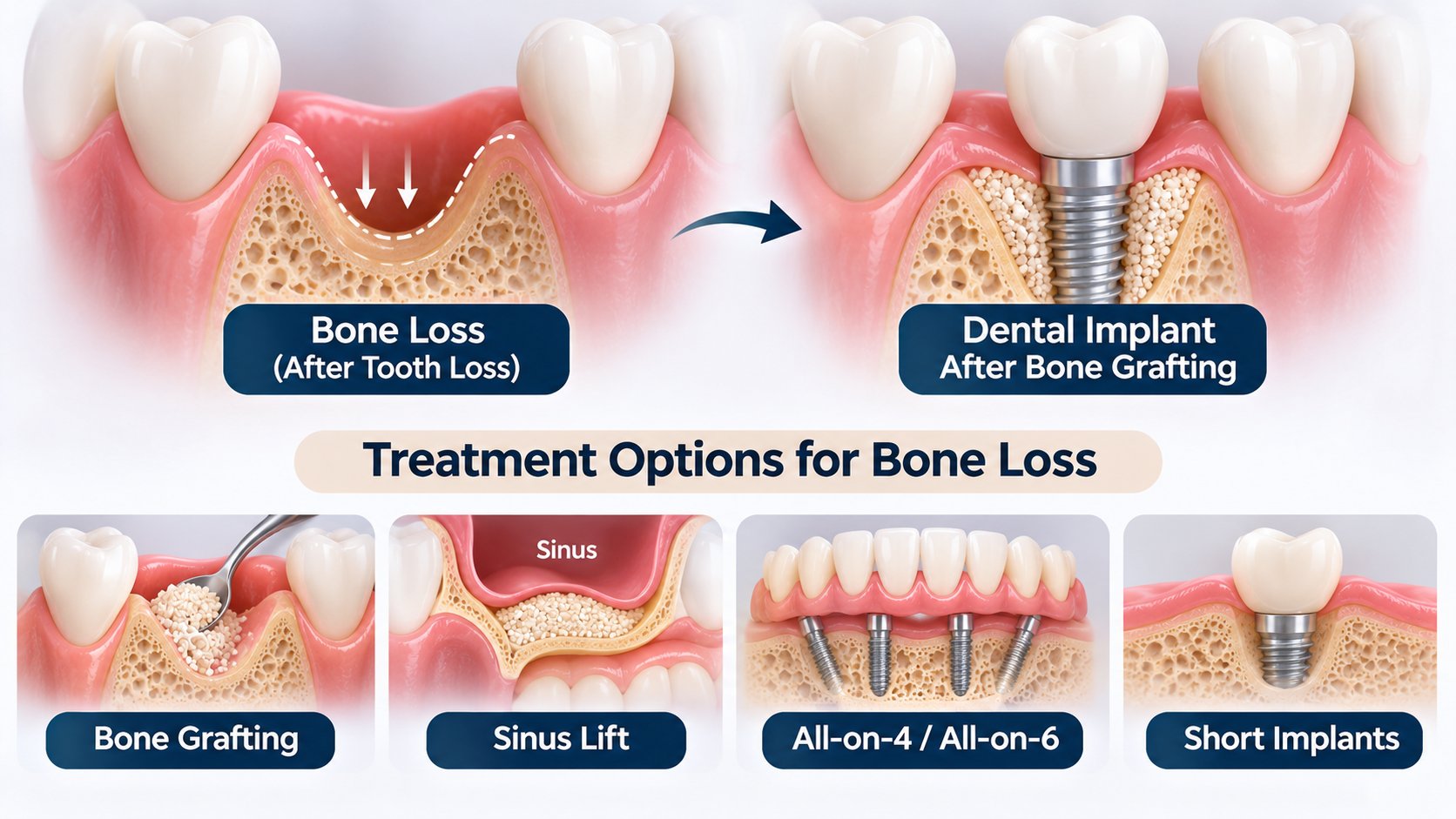
Bone Grafting
A bone graft adds bone, or bone substitute material, to the area that's thinned. Over a few months, your body builds new bone around it, giving the implant a solid base.
Small grafts can sometimes be done during implant placement. Larger ones usually need to heal before the implant goes in.
Sinus Lift Surgery
The upper back jaw has its own challenge: the sinuses sit just above it. When teeth are lost there, the bone can shrink and the sinus can drop lower, leaving too little height for an implant.
A sinus lift gently raises the sinus membrane and places graft material underneath. The bone usually needs around 4–9 months to heal, although an implant can sometimes go in at the same time. Our sinus lifting page explains the procedure in more detail.
All-on-4 and All-on-6 Dental Implants
If you're missing most or all of your teeth, a full-arch option may avoid grafting altogether. With All on 4, the back implants are placed at an angle so they can use the bone that's still available, which often reduces the need for a graft.
All on 6 uses two more implants to spread the load, and may suit people with a bit more bone to work with. Neither option suits every case of bone loss, and some patients will still need grafting first.
Short Dental Implants
In some cases, a shorter implant can be placed where there isn't enough bone height for a standard one. It may avoid a graft, but it isn't suitable for everyone, and your dentist will look at bite forces and bone quality before suggesting it.
Can You Get Dental Implants Without a Bone Graft, Even with Severe Bone Loss?
Sometimes. Angled implants, short implants or a full-arch approach can often work around moderate bone loss without grafting.
With severe bone loss, the options narrow, but they don't always disappear. Some patients will need grafting first. Others may be offered specialist options such as zygomatic implants, which anchor in the cheekbone, or an implant-supported denture.
And if implants really aren't right for you, a good denture is still a valid choice. Our comparison of dental implants vs dentures can help you weigh it up.
How Long Does Treatment Take If You Have Bone Loss?
It depends on what you need.
- No graft needed: Treatment follows the usual implant timeline, with healing of around 4–6 months before the final crown.
- Graft or sinus lift at the same time as the implant: Often a similar timeline, though healing may take a little longer.
- Graft first, implant later: Usually several months of healing before the implant goes in, then the normal implant healing time on top. This often means an extra trip.
If you're planning travel around treatment, How Long Do You Need to Stay in Turkey for Dental Treatment? breaks down the visits.
How Much Do Dental Implants with Bone Grafting Cost in Turkey?
Bone grafting is usually priced separately from the implant itself.
| Treatment | Turkey (typical) | UK (typical private) |
|---|---|---|
| Bone graft (per site) | roughly £100 – £400 | £200 – £1,500 |
| Sinus lift | roughly £500 – £1,300 | £800 – £2,500 |
The final price depends on how much bone is needed, the graft material and whether the work is done in one stage or two. Always ask whether your quote includes grafting or a sinus lift, because these extras are one of the most common surprises on an implant bill.
Dental Implant Treatment with Bone Loss in Antalya
Bone loss cases need careful planning more than anything else. At Yalın Dental Clinic, we start with a 3D scan and a full assessment, then explain your options, including the simpler ones, before suggesting any surgery.
Where needed, sinus lifting can help create sufficient bone height in the upper back jaw. In selected full-arch cases, bone reduction may be used to reshape an uneven ridge or create space for the planned restoration; it removes bone and does not rebuild bone lost around missing teeth. If you're nervous about the surgical side, Are Dental Implants Painful? covers what to expect.
Frequently Asked Questions
Can you get dental implants with bone loss?
Often, yes. Depending on how much bone is missing, your dentist may suggest a bone graft, a sinus lift, angled implants or a full-arch option such as All on 4.
Is a bone graft painful?
Most grafts are done under local anaesthetic, so you shouldn't feel pain during the procedure. Some swelling and tenderness for a few days afterwards is normal and usually manageable with medication.
Can I get All on 4 if I have bone loss?
Many people with bone loss can, because the angled back implants make the most of the bone that's still there. If the bone loss is severe, though, grafting or another approach may still be needed.
How long after a bone graft can I get an implant?
It depends on the graft. Small grafts can sometimes be done at the same time as the implant, while larger grafts or sinus lifts usually need several months to heal first.
Does bone loss increase the risk of implant failure?
Not enough bone can make an implant less stable, which is why careful planning and, where needed, grafting matter so much. Our guide to dental implant failure explains the warning signs.
Can bone loss be reversed without surgery?
Bone that has already been lost won't grow back on its own. Replacing a missing tooth sooner, and keeping your gums healthy, can help prevent further loss.
Will I need two trips to Turkey?
Most implant patients do, and a separate bone graft can sometimes add another visit. Your treatment plan will tell you exactly how many trips your case needs.
Not Sure If You Have Enough Bone? Ask Yalın Dental Clinic
You don't have to work this out alone.
Send us a recent X-ray or scan if you have one, or a few clear photos of your teeth, and our team in Antalya will tell you honestly which options might suit you. Your final treatment plan will be confirmed after an in-person examination and 3D scan with our dentist.
Contact Yalın Dental Clinic and we'll help you find the right way forward.