







If you are coming to Antalya for dental implants, you will be flying home not long after surgery. So it is natural to wonder whether the flight is safe and whether it will hurt. The good news is that for most patients flying home is perfectly fine, as long as the timing is right and you follow a few simple steps.
The Short Answer
Yes, you can fly after dental implants. The timing depends on your procedure and recovery; two or three days should not be treated as automatic clearance. After more complex surgery, such as a sinus lift or bone graft, you may need to wait longer. Your surgeon will always confirm when you are ready to travel.
Why Does Flying Matter After Dental Surgery?
During a flight, the cabin pressure changes as the plane climbs and descends. Straight after surgery, this can make swelling or throbbing feel a little worse. It can also put pressure on the sinuses, which matters if you have had treatment in the upper jaw.
Long flights also mean sitting still, dry cabin air and limited access to water. None of these is dangerous on its own, but they are the reason we plan your flight carefully.
How Soon Can You Fly After Each Treatment?
- Fillings, whitening, veneers and crowns: These do not involve surgery, so flying is usually fine within a day or two.
- Tooth extraction: The timing depends on bleeding, pain, healing and whether the extraction involved the sinus. Ask your dentist to confirm when you can fly.
- Single or multiple implants: Your surgeon will advise a waiting period based on the extent of surgery and your recovery; arrange a review before departure.
- All on 4 or All on 6: Your first visit usually lasts around a week. This gives us time to check your healing and your temporary teeth before you fly.
- Sinus lift or bone graft: These procedures need individual advice. Sinus lift recommendations can extend to six weeks; other bone grafts may have different restrictions. Confirm your waiting period with your surgeon before booking flights.
- Sedation or general anaesthesia: You should not travel on the same day, and you should not travel alone until you are fully alert.
A 2023 review on dental tourism and air travel recommends waiting one week after most dental interventions and six weeks after a sinus lift, while noting that research is limited. Your surgeon must assess your own procedure and recovery before confirming your travel date.
How We Plan Your Flight at Yalın Dental Clinic
We will not rush you to the airport. Before you fly home, you will have a check-up so your surgeon can see how the area is healing. We also recommend booking your return flight a day later than your last planned appointment, just in case. For typical trip lengths, see how long to stay in Turkey for dental treatment.
Tips for a Comfortable Flight Home
- Take your medication on time. Use the painkillers and any antibiotics you have been given, and take a dose before boarding if your dentist advises it.
- Drink plenty of water. Cabin air is dry, and staying hydrated helps healing.
- Avoid alcohol. It can slow healing and increase swelling.
- Eat soft food. Pack something soft for the journey and avoid crunchy airport snacks.
- Do not blow your nose. This is especially important after a sinus lift. If you need to sneeze, do it with your mouth open.
- Keep your head up. If you want to sleep, use a travel pillow so your head stays slightly raised.
- Bring a cold pack. A small ice pack, or cold drinks from the cabin crew, can ease swelling.
When Should You Delay Your Flight?
Contact your dentist before flying if you notice:
- Bleeding that does not stop with gentle pressure
- Swelling that is getting worse rather than better after the third day
- A fever or a bad taste that could suggest infection
- Strong pain in the upper jaw or sinus area
- A temporary tooth or bridge that feels loose
These problems are uncommon, but it is always better to deal with them in Antalya than once you are home.
What About Your Second Trip?
By the time you come back for your final teeth, the implants have had several months to heal. If the visit only involves fitting the final teeth, travel restrictions are usually fewer. Allow time for a bite check and any adjustments, and confirm your departure date with your dentist.
Dental Implants Before and After
Here are two of our patients before and after their implant treatment in Antalya. Each photo shows the smile and the panoramic X-ray before and after treatment.
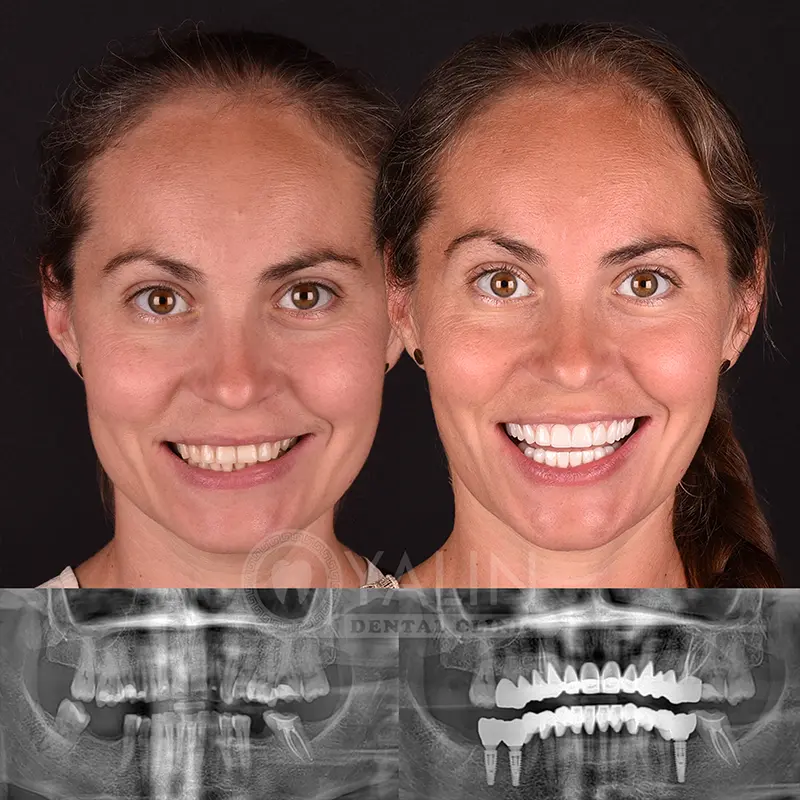
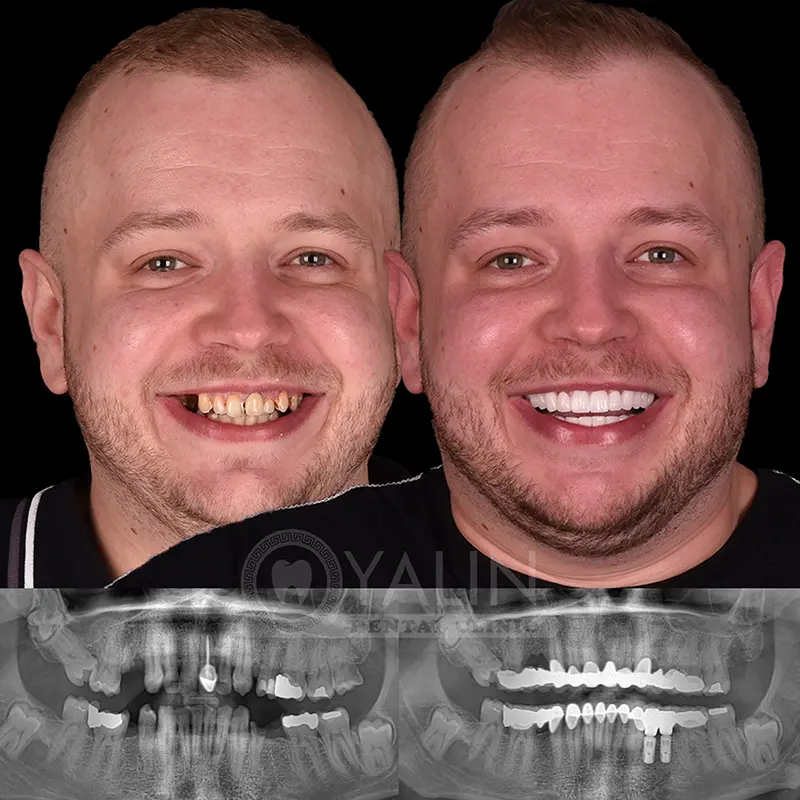
See more results on our dental implant and before and after pages.
Frequently Asked Questions
Can I fly 2 days after dental implants?
Do not assume that flying two days after surgery is suitable for you. Your surgeon should confirm your travel date after assessing the procedure, symptoms and healing.
Does flying make dental implants fail?
Flying is not generally identified as a direct cause of implant failure, but travelling too soon may complicate recovery, particularly after sinus surgery. Follow your surgeon's travel and aftercare advice. Read more about failed dental implants.
Is it painful to fly after implant surgery?
Most patients feel little or no difference. Some notice mild pressure or throbbing, which is easily managed with painkillers. See also: Are dental implants painful?
How long after a sinus lift can I fly?
There is no single waiting period suitable for everyone. Published recommendations after a sinus lift can extend to six weeks. Ask your surgeon to confirm your individual waiting period before booking flights.
Plan Your Treatment and Travel With Us
If you are planning implant treatment in Antalya, our coordinators can help you work out the right dates before you book. Send us a message on WhatsApp and we will plan your treatment and travel together, or contact us directly.
